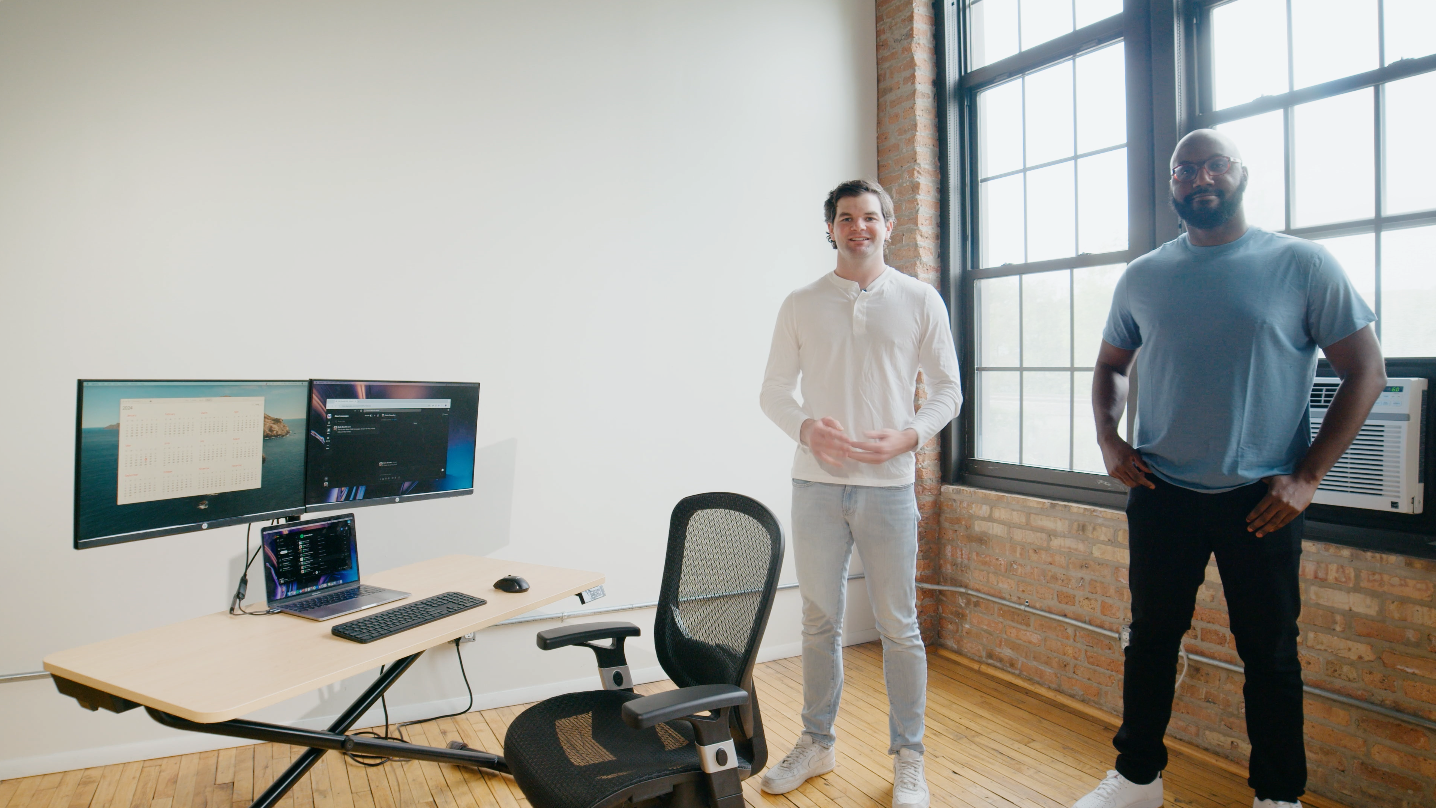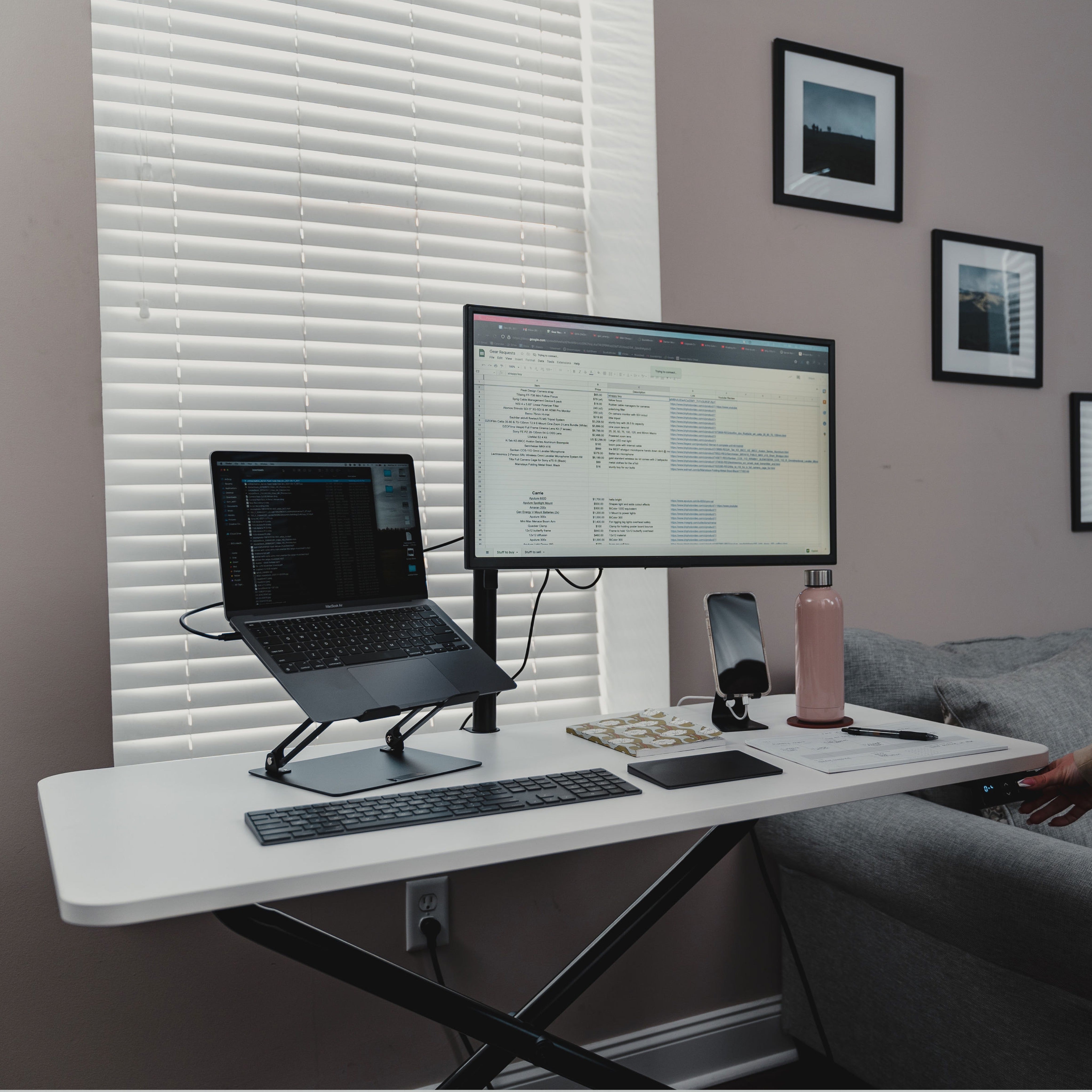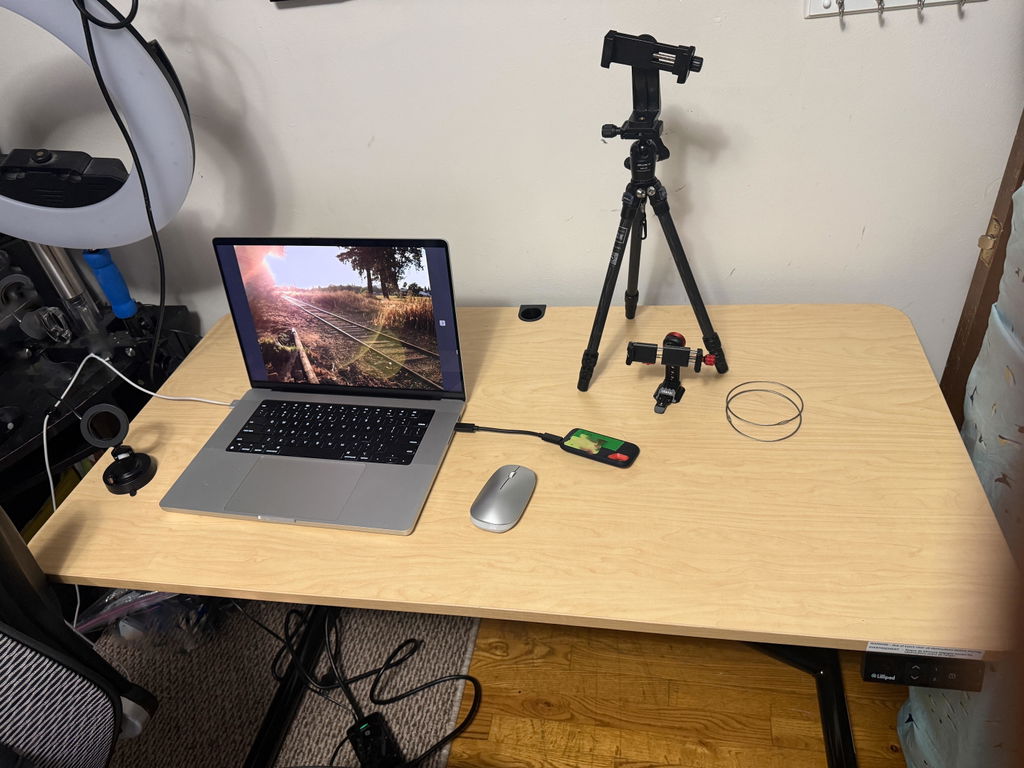
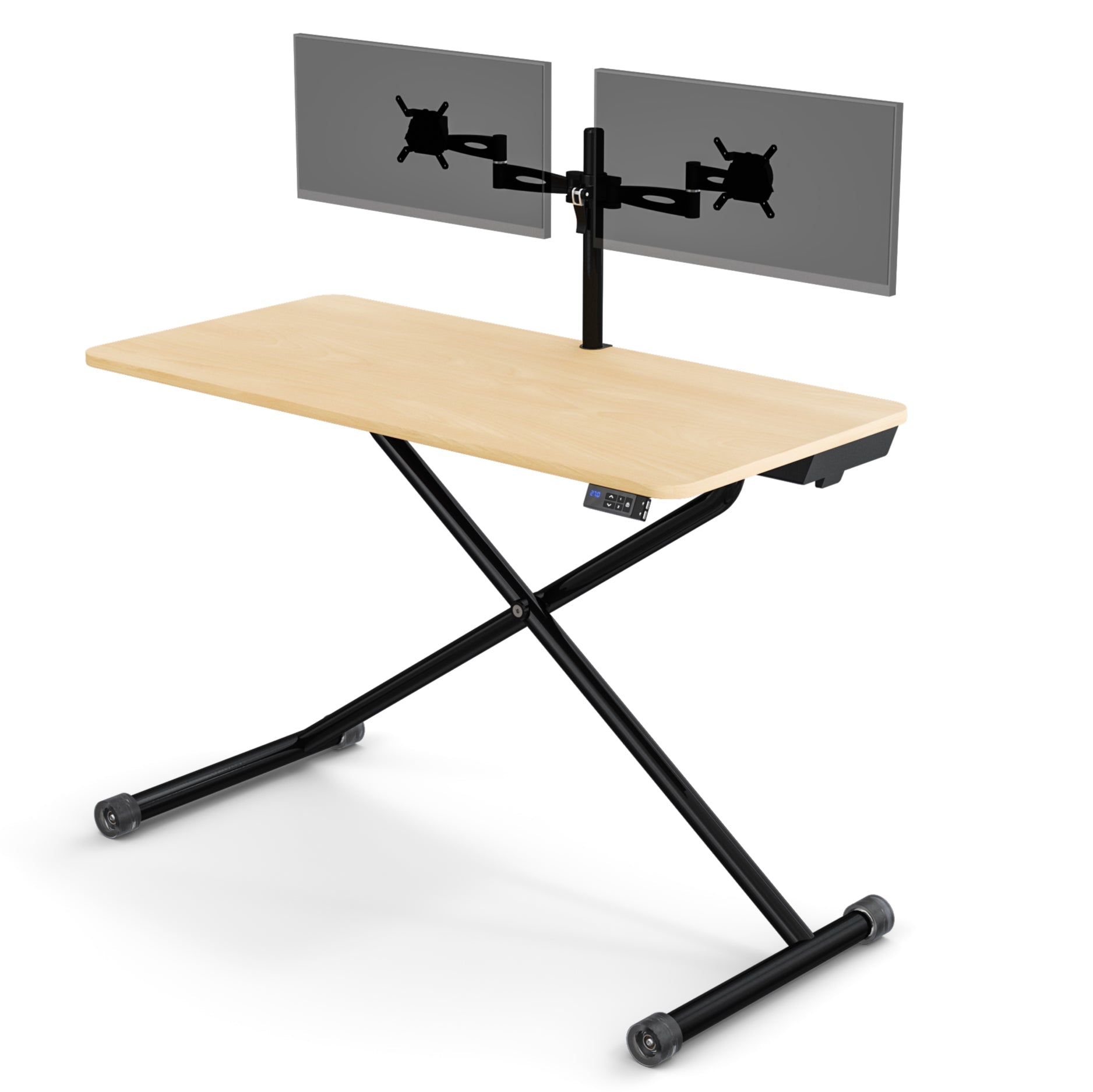
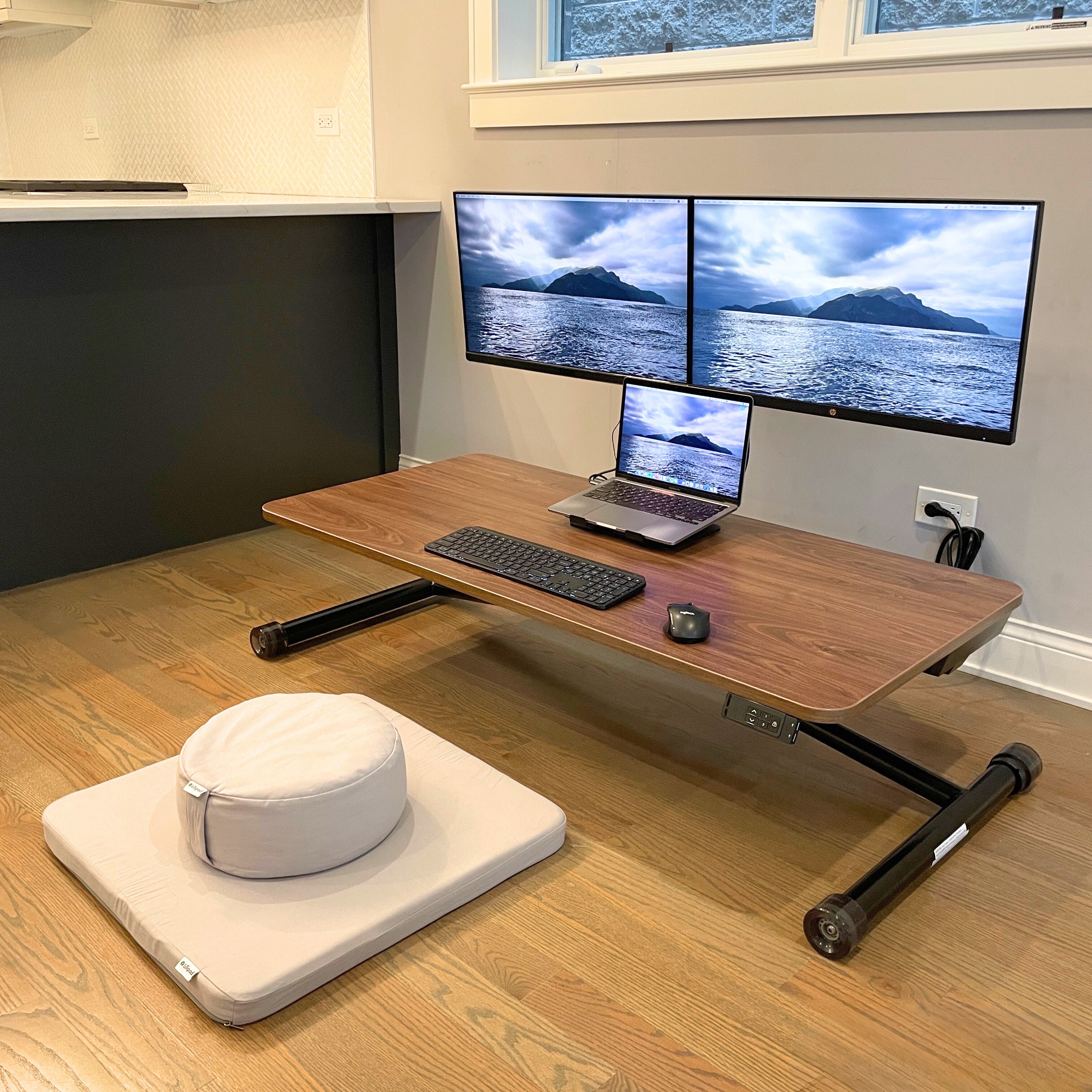
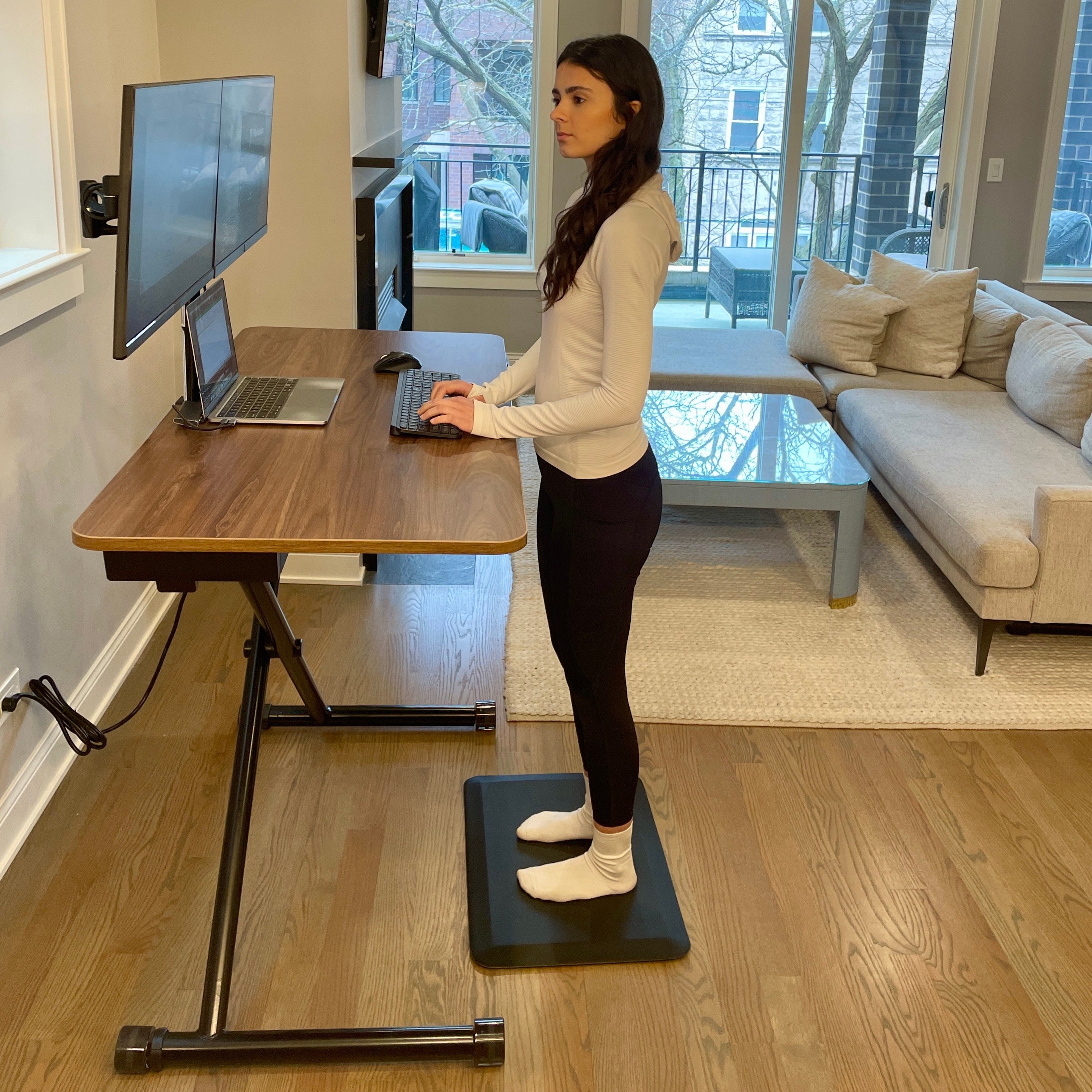
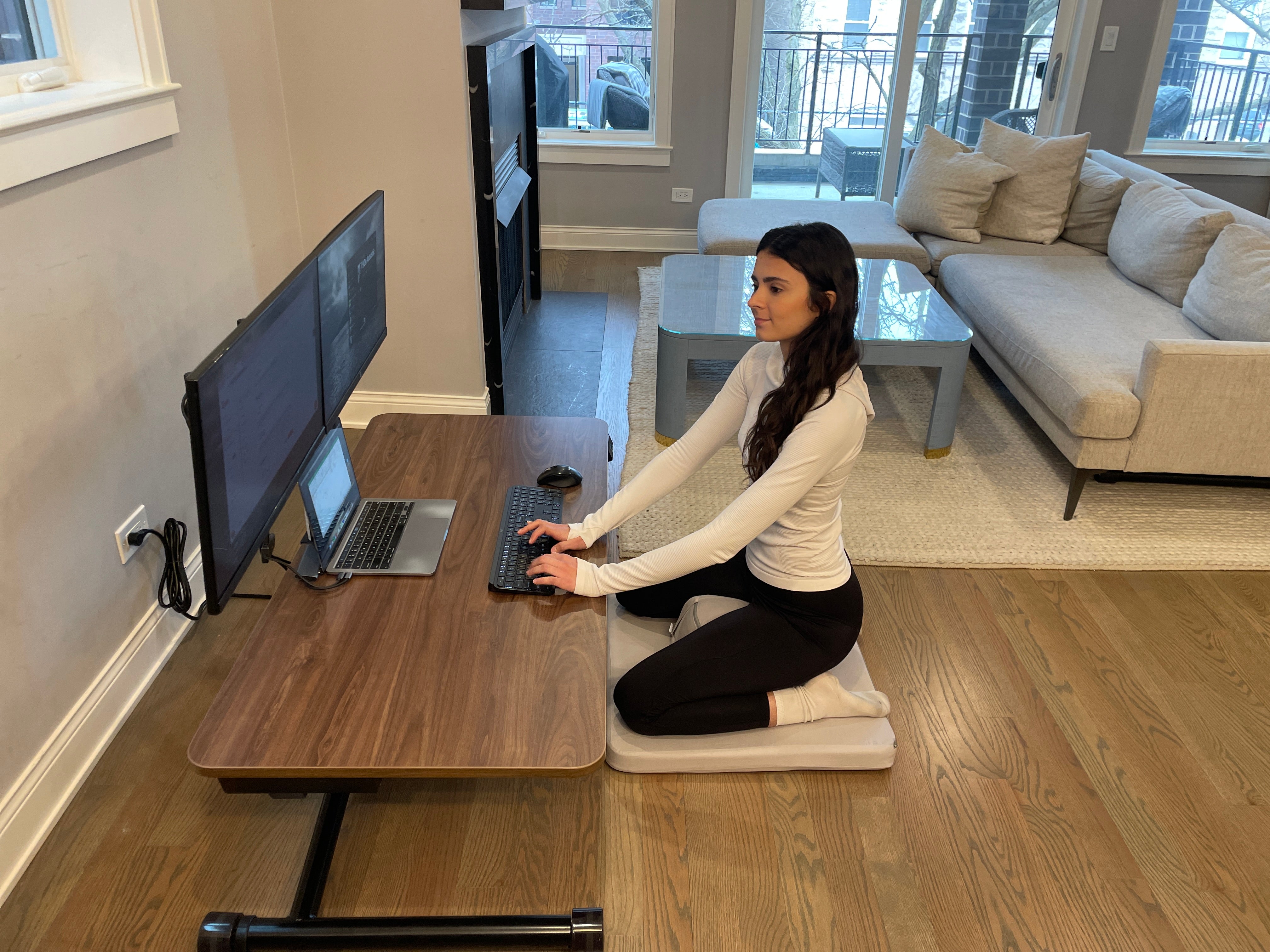
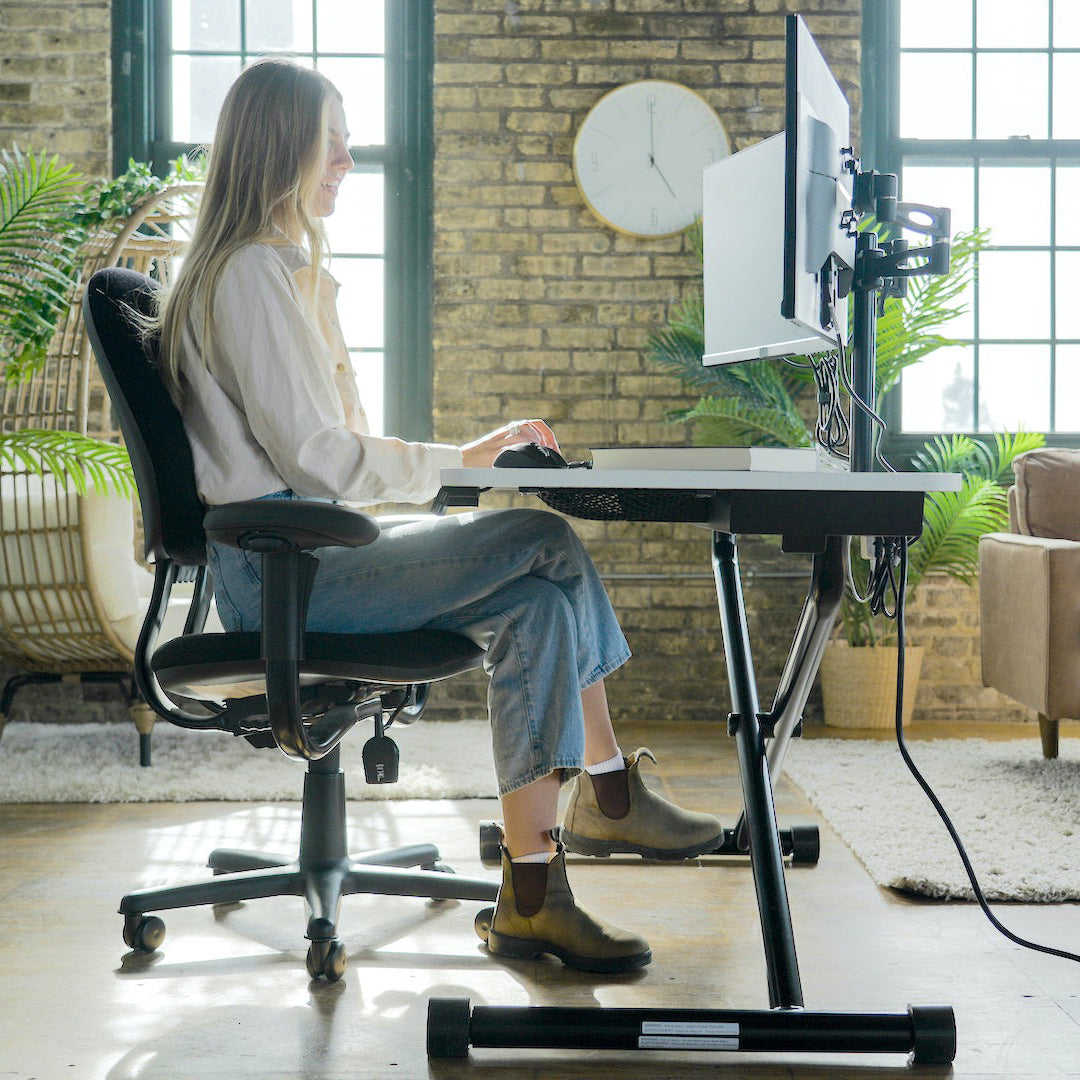
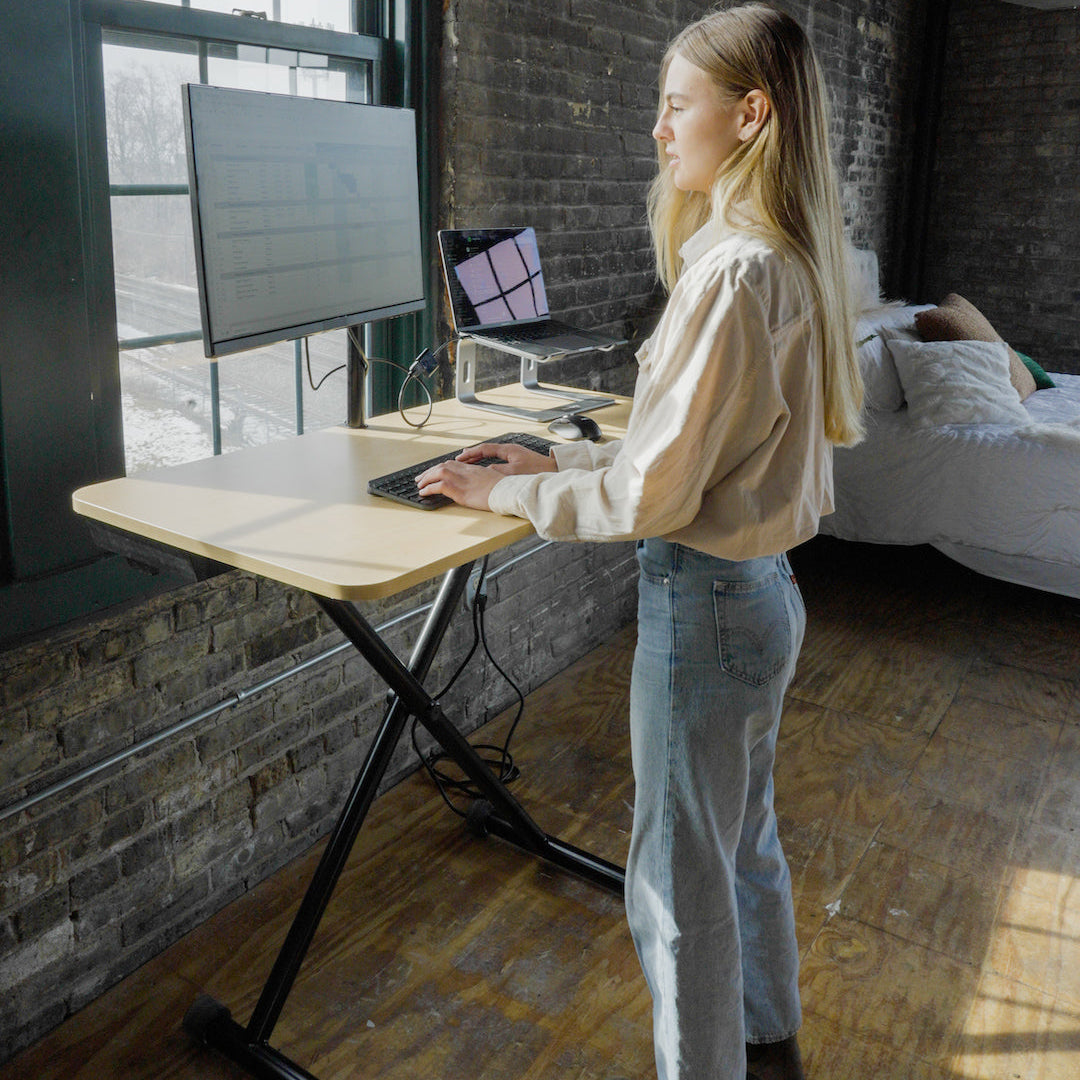
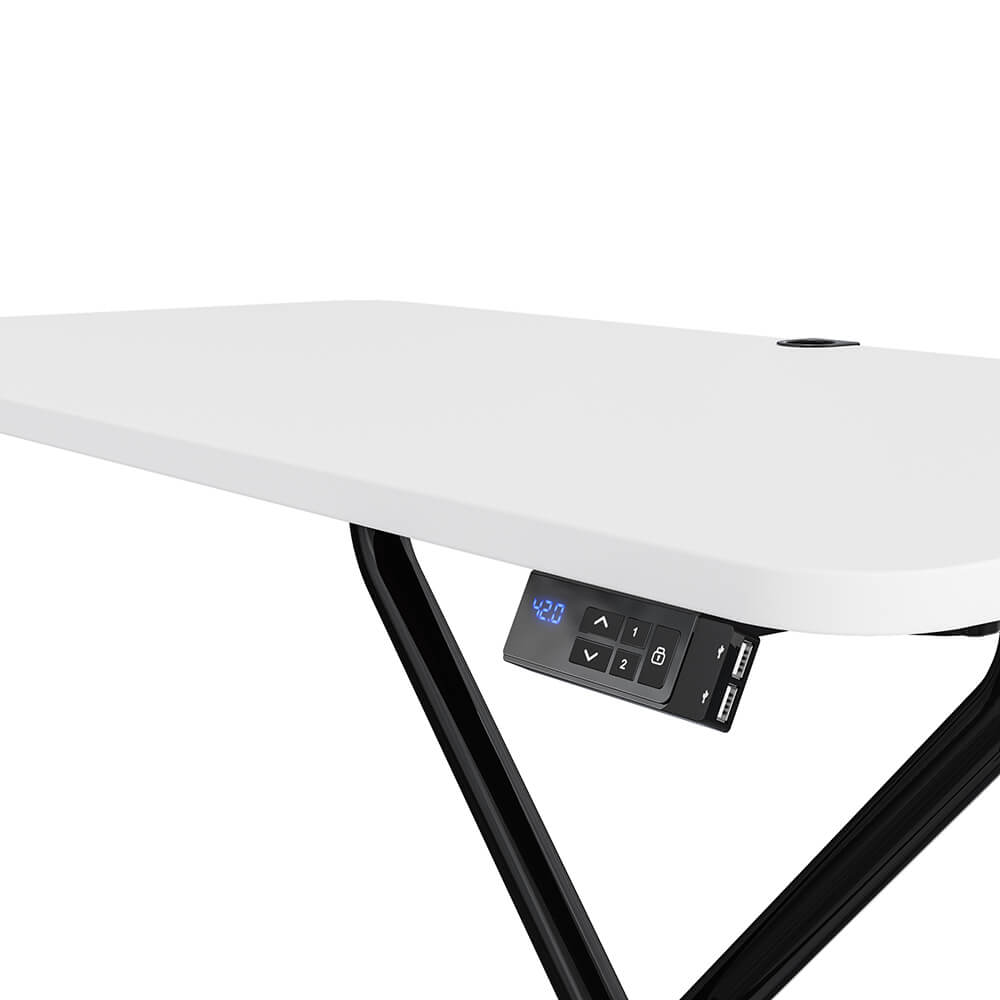
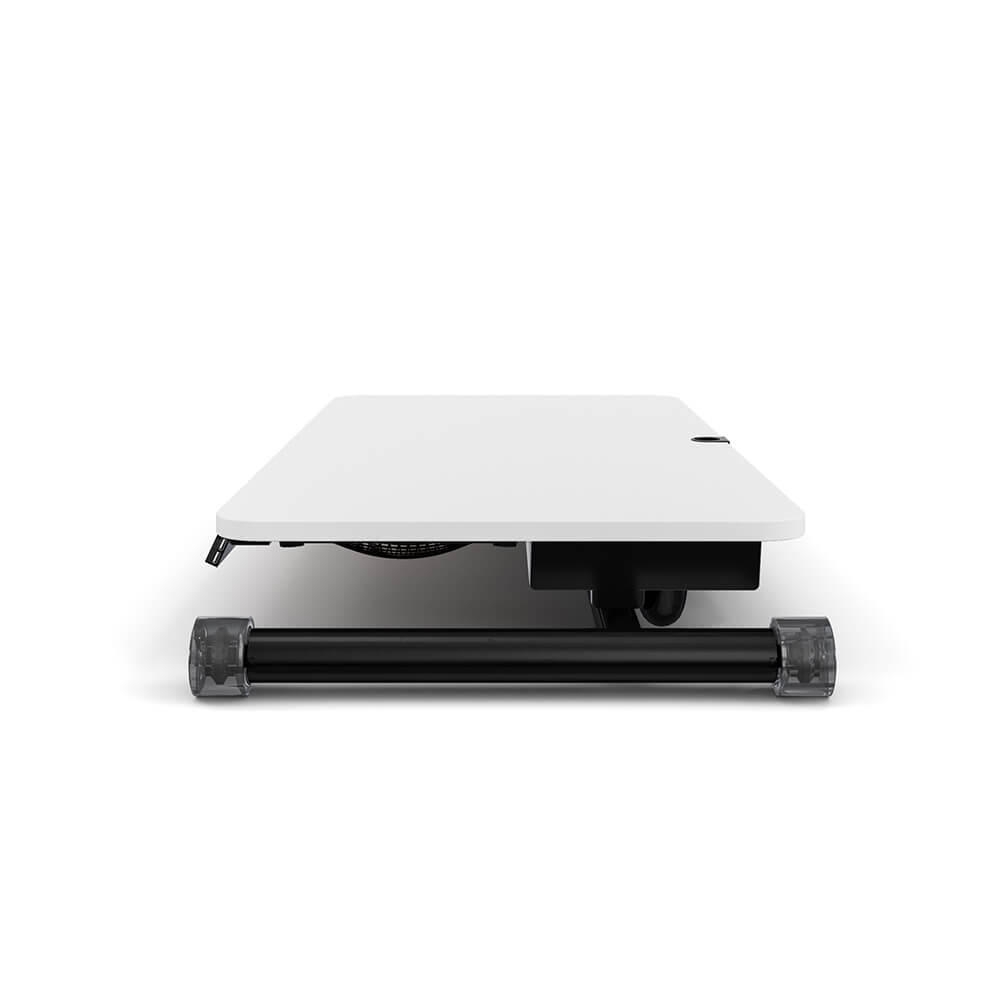
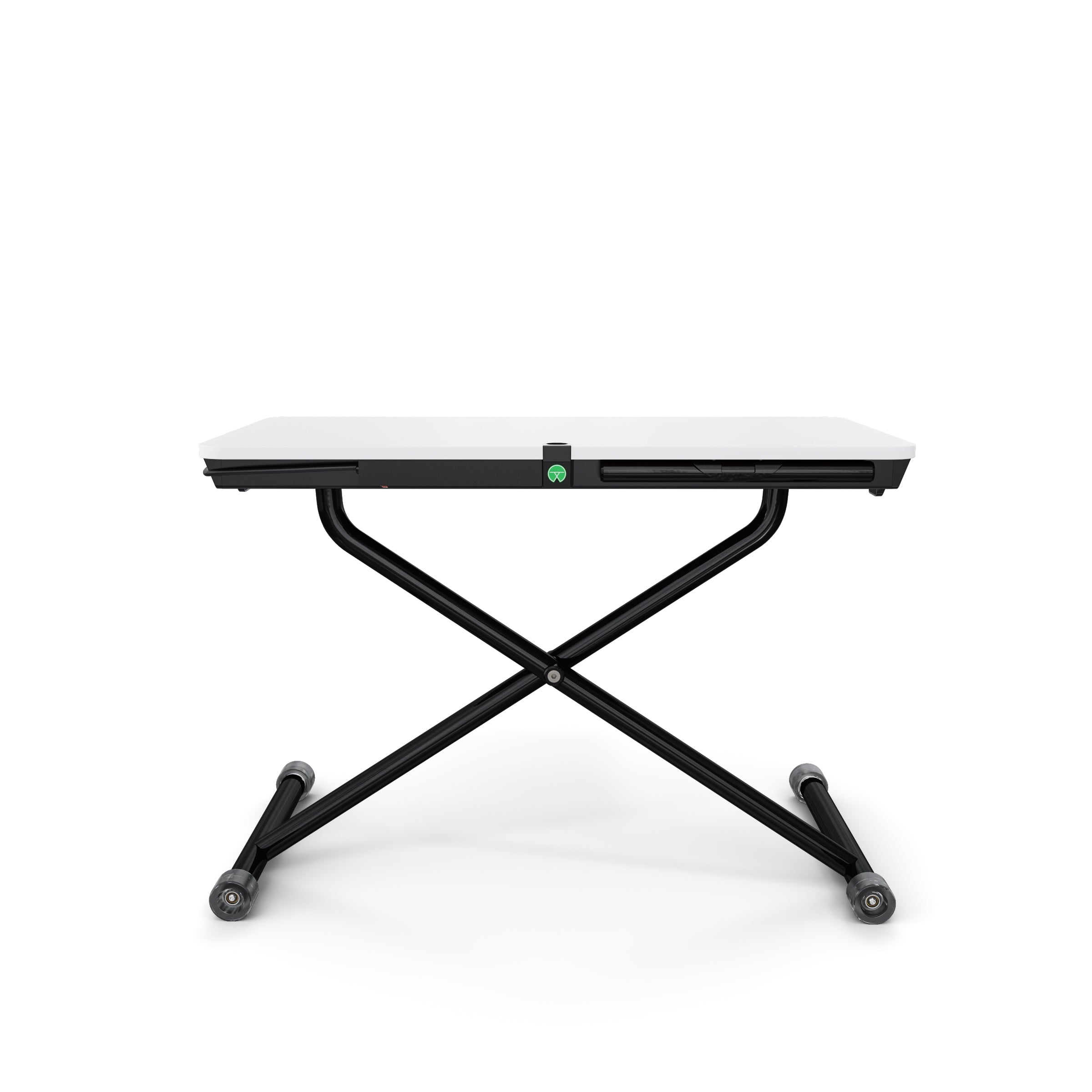
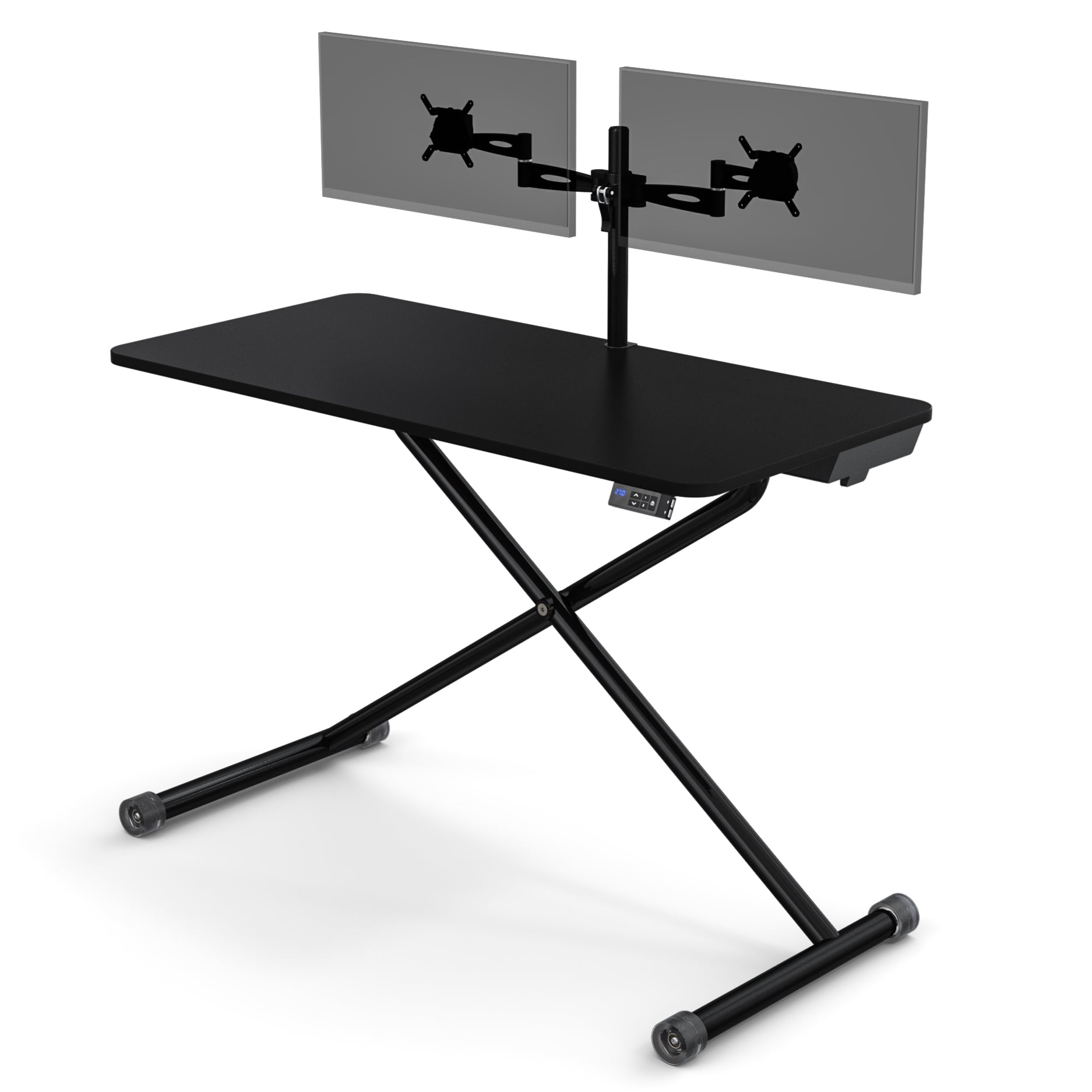
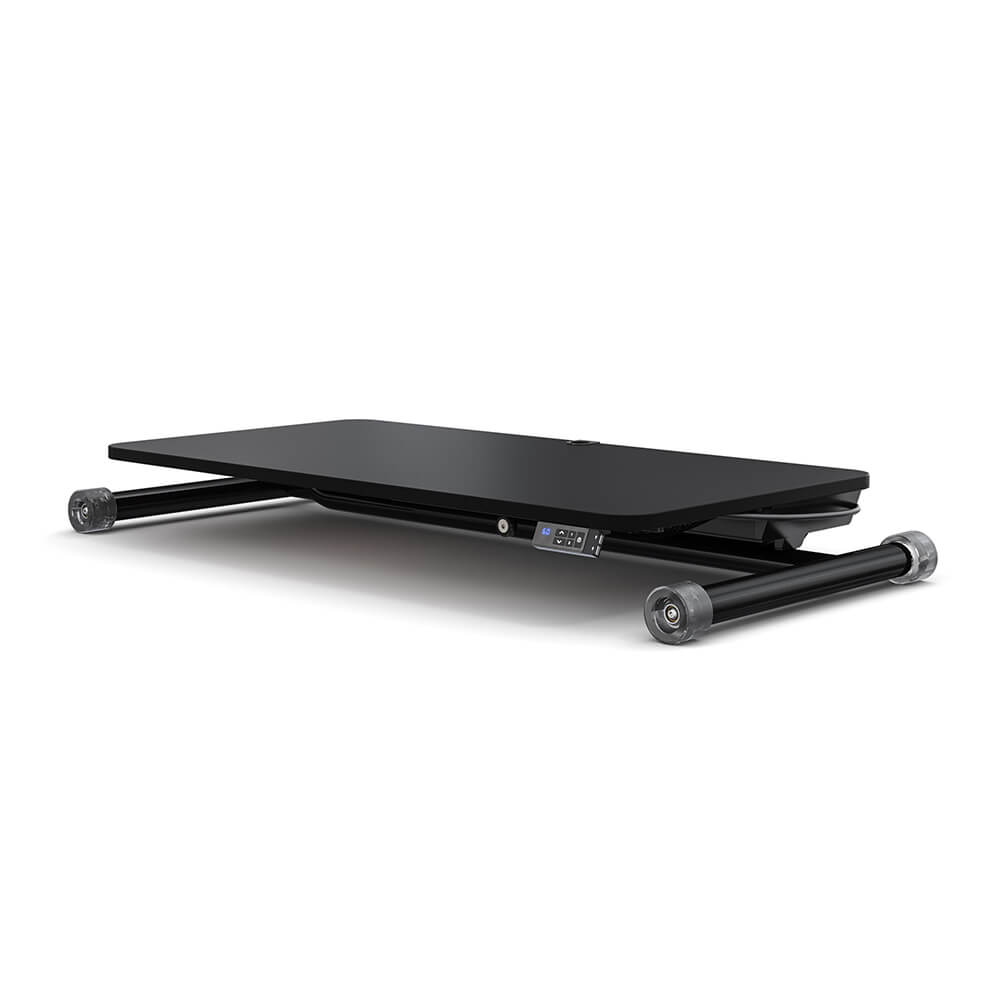
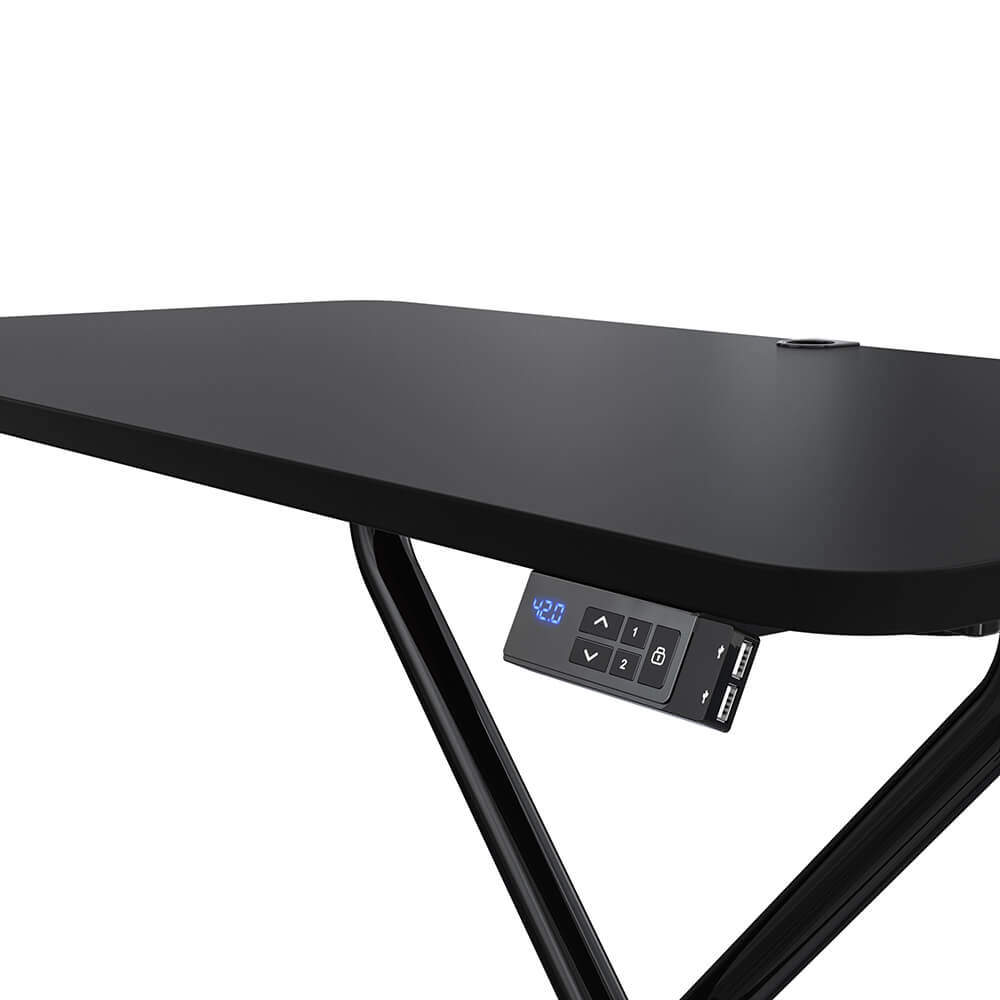
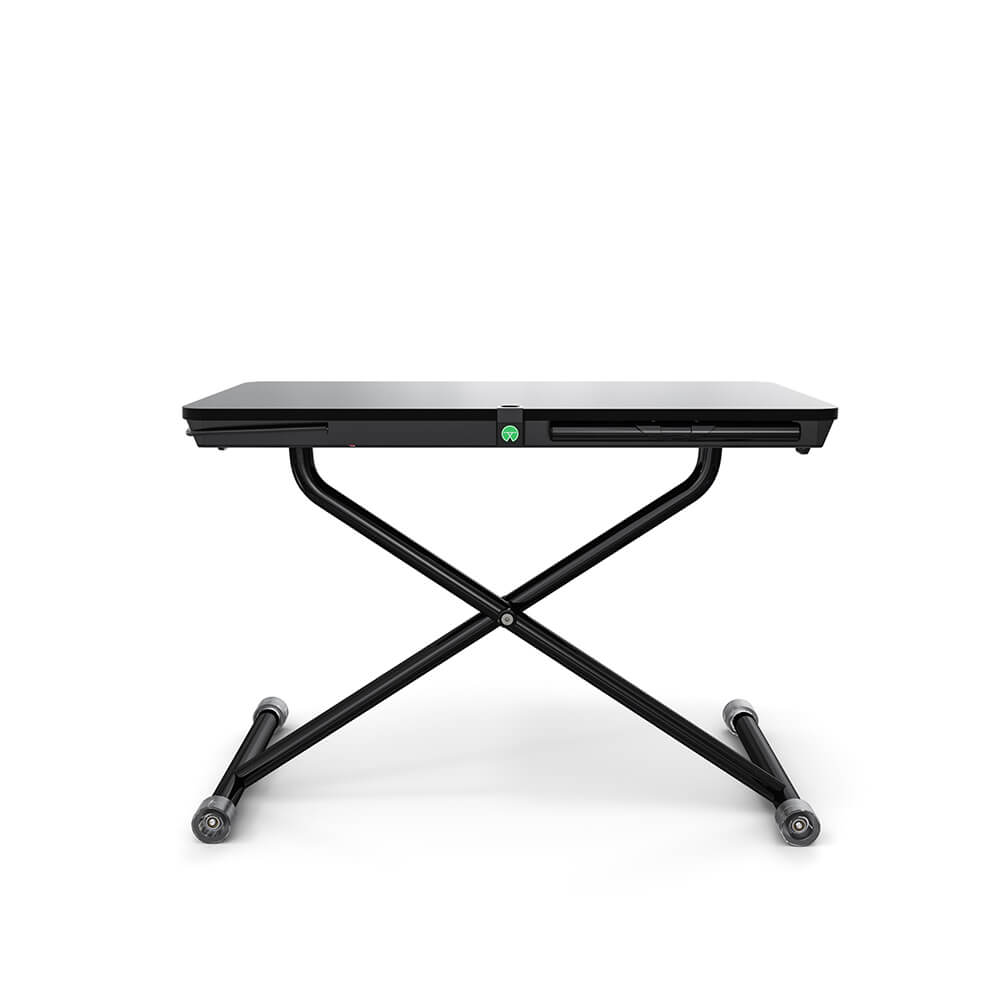
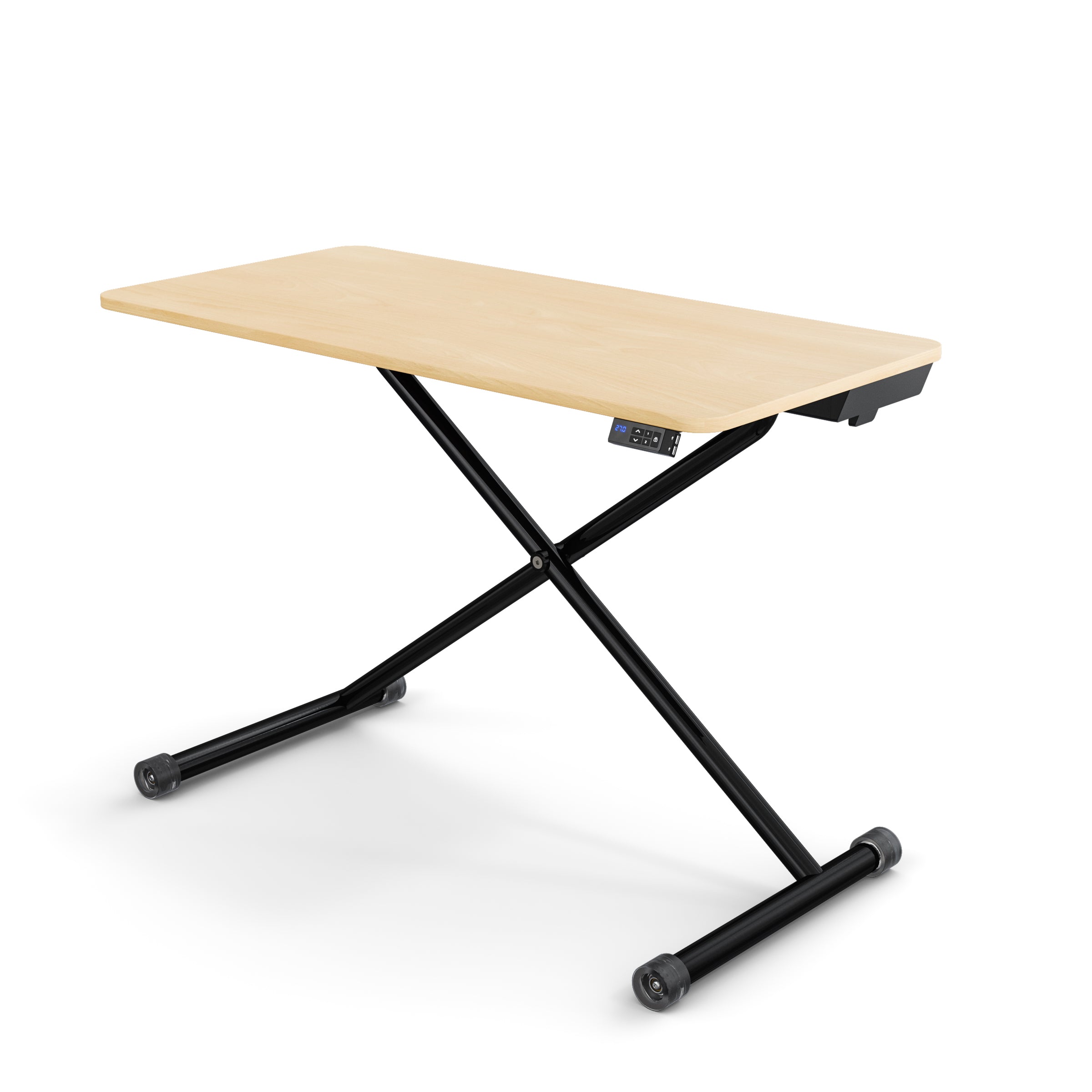
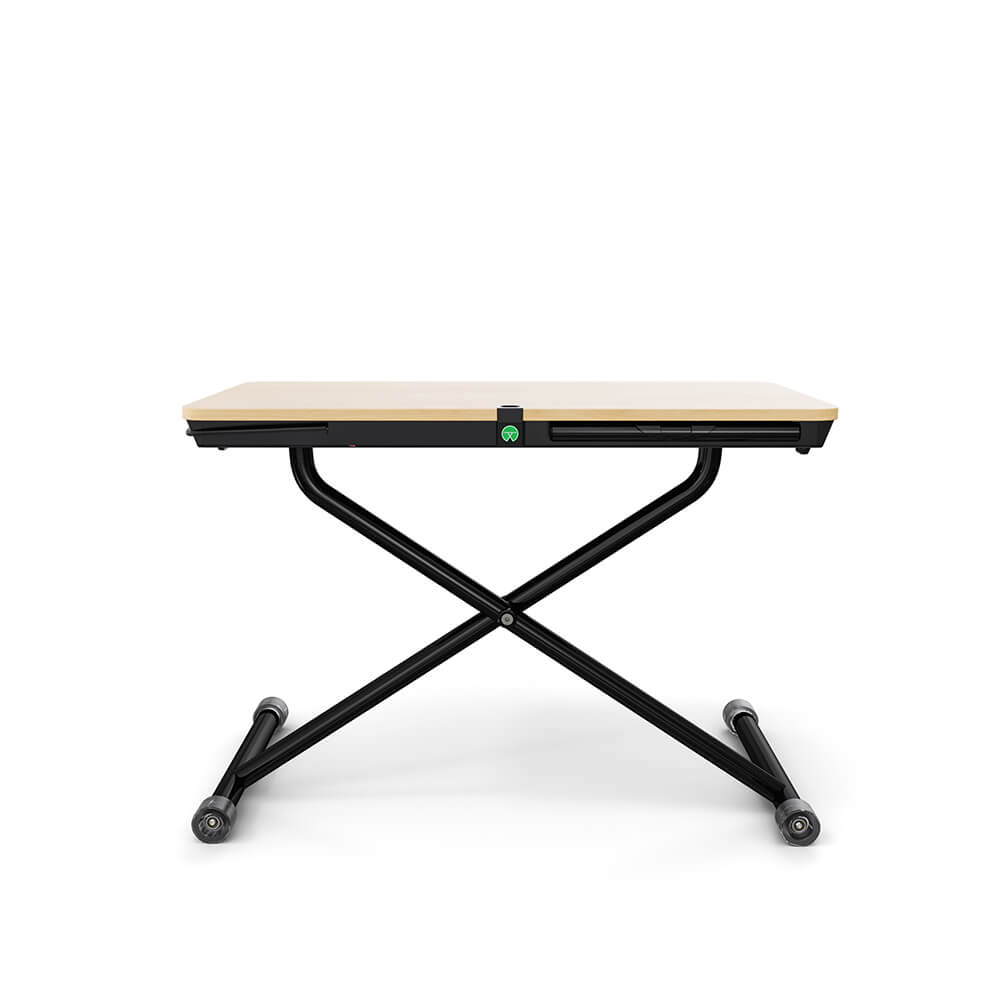
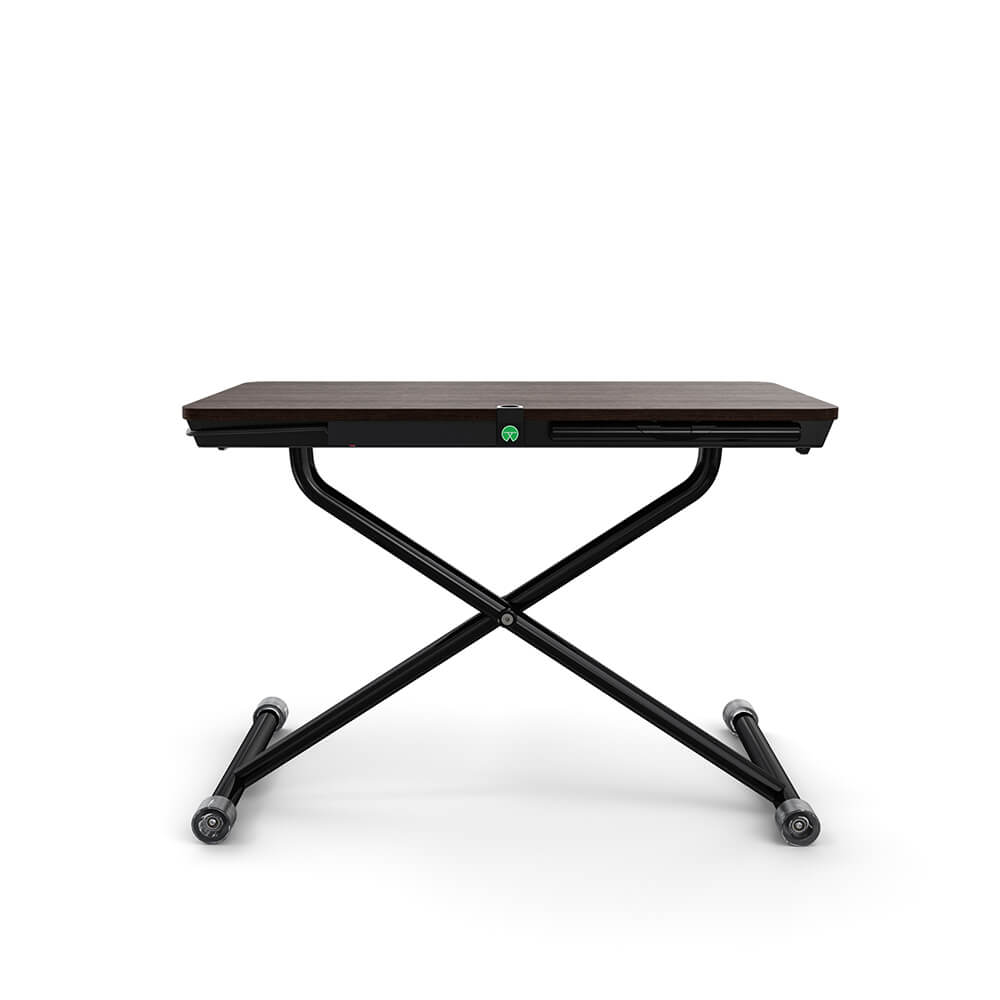
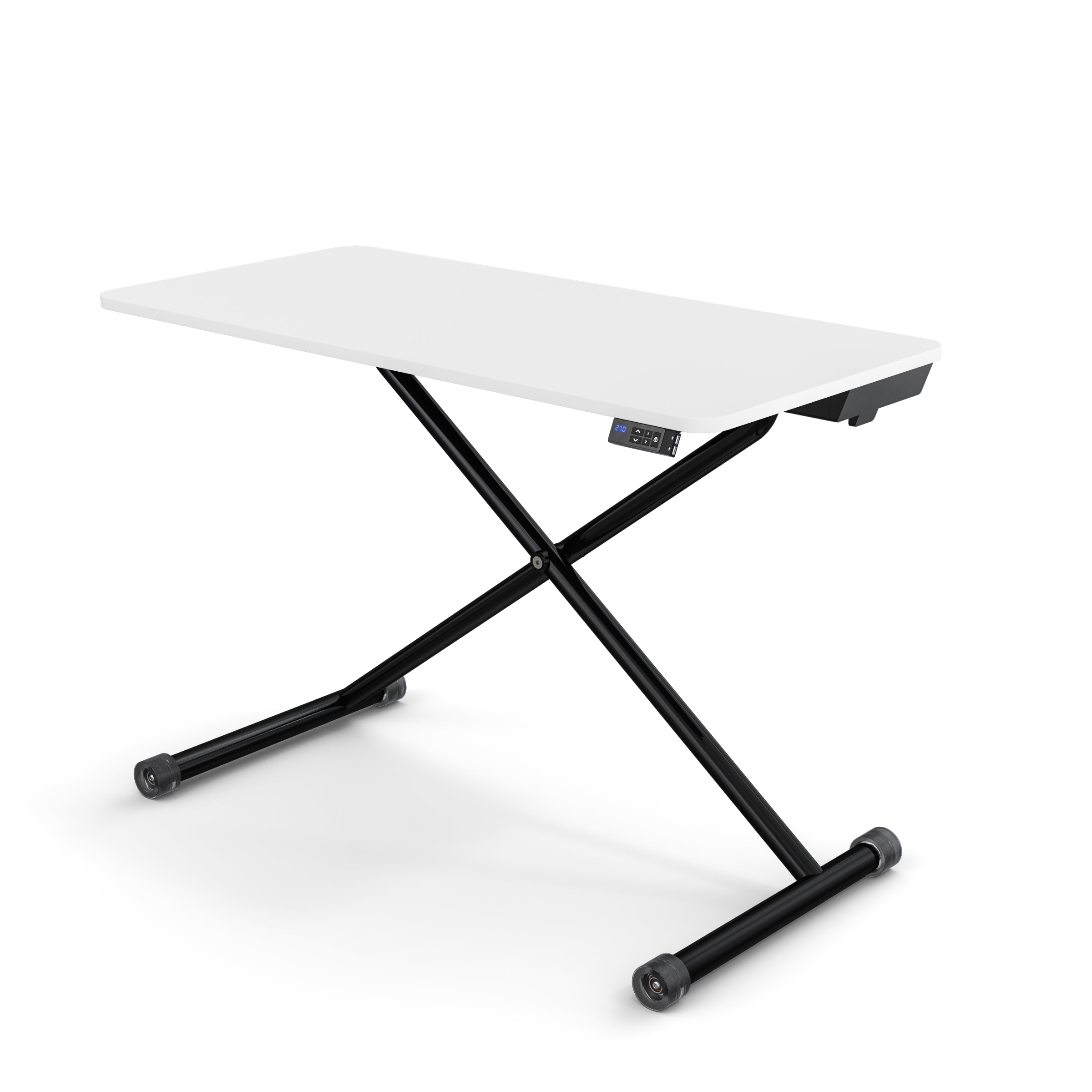
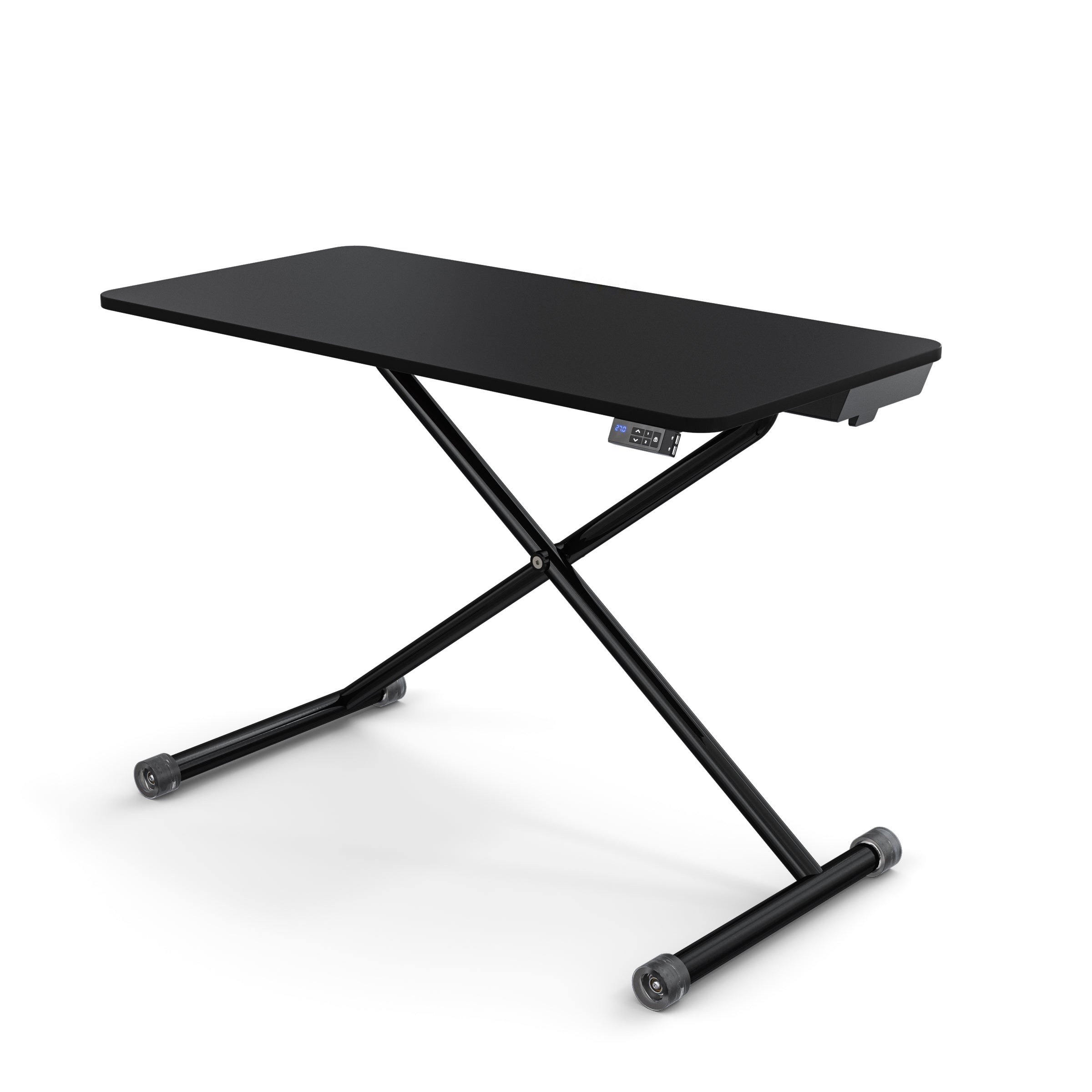
Lillipad supports floor sitting, chair sitting, and standing—giving your body the freedom to move and work the way it wants.
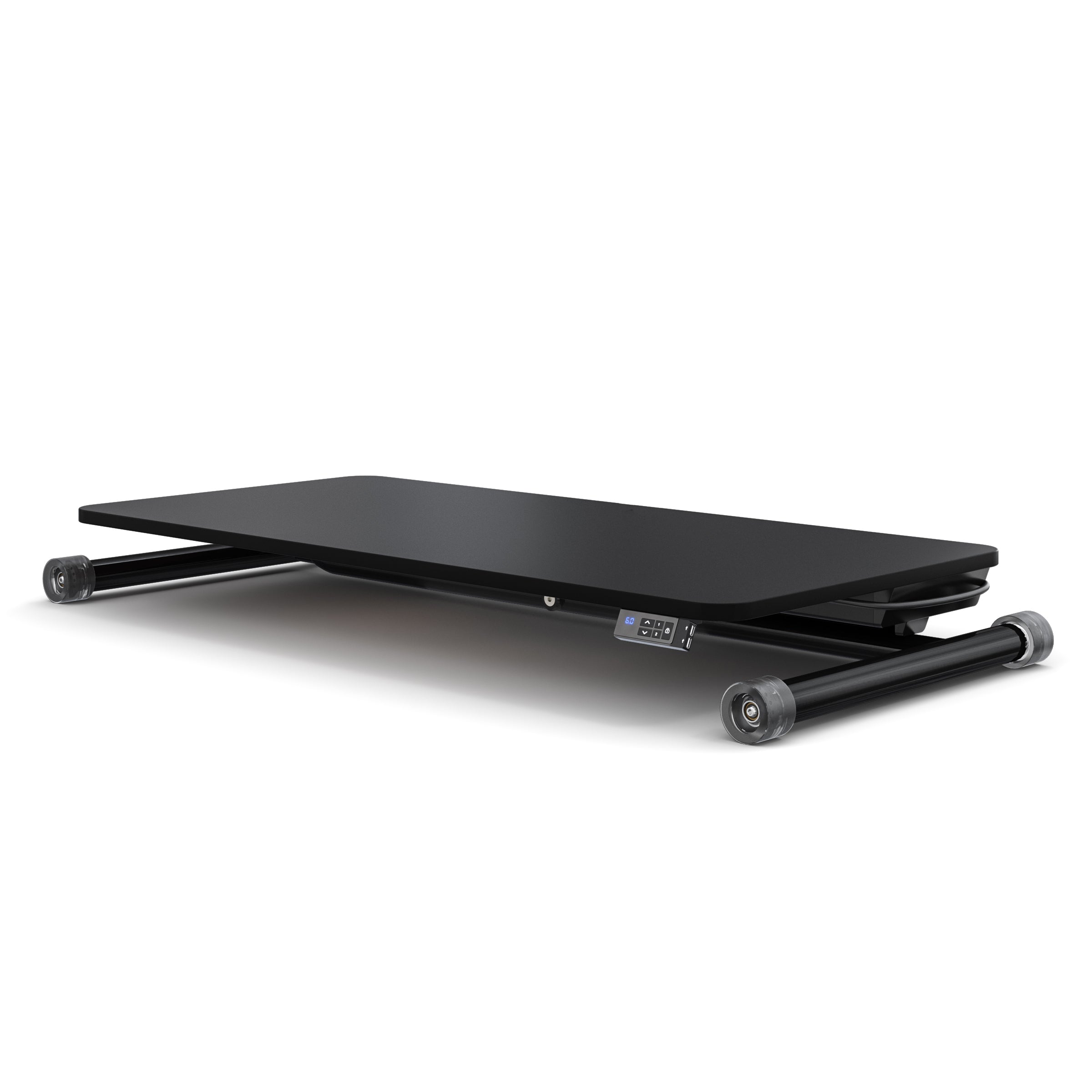
Built with our patented X-frame, it adjusts from just 6" to 48", offering unmatched flexibility. It’s also the world’s only foldable electric standing desk—no assembly, no permanent space required.
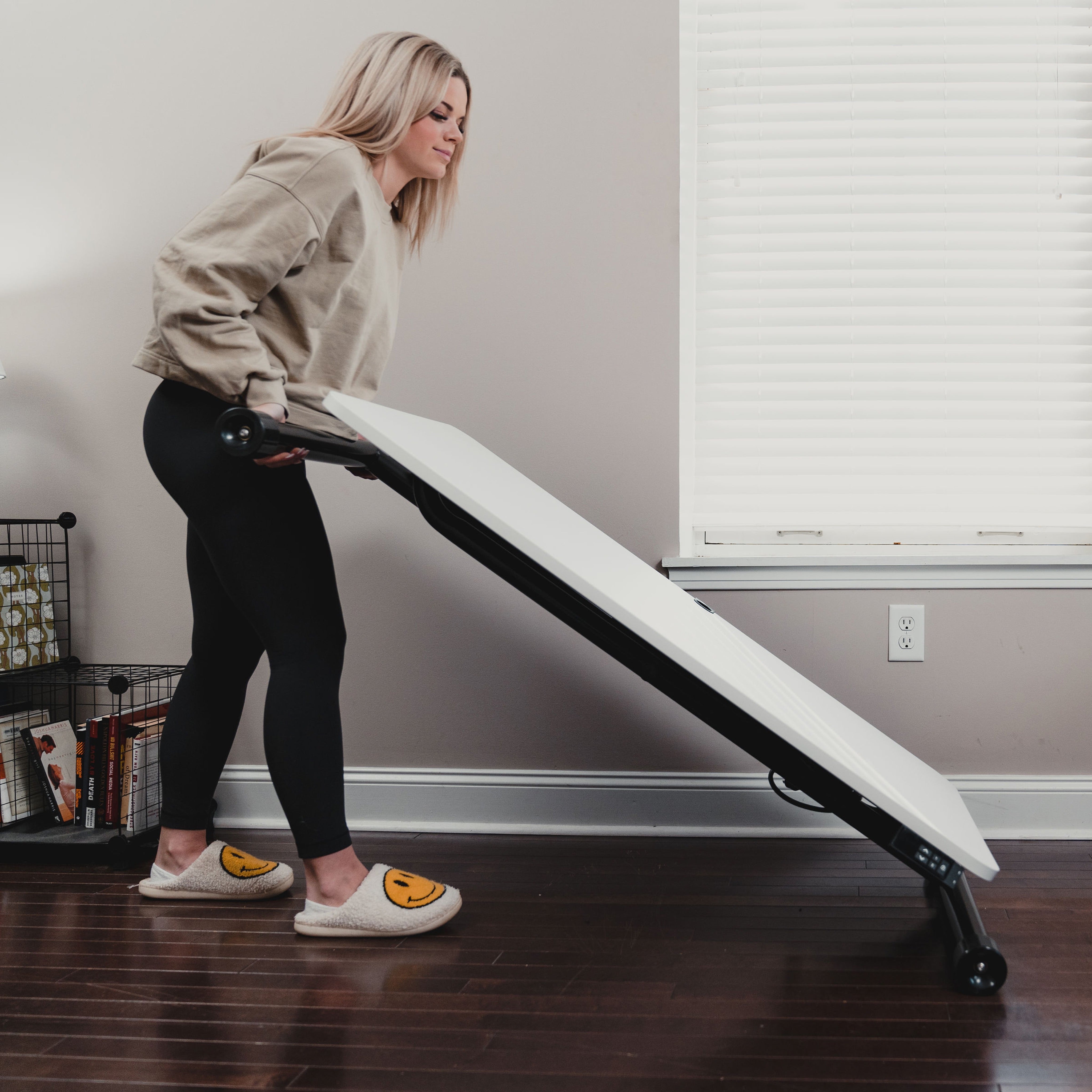
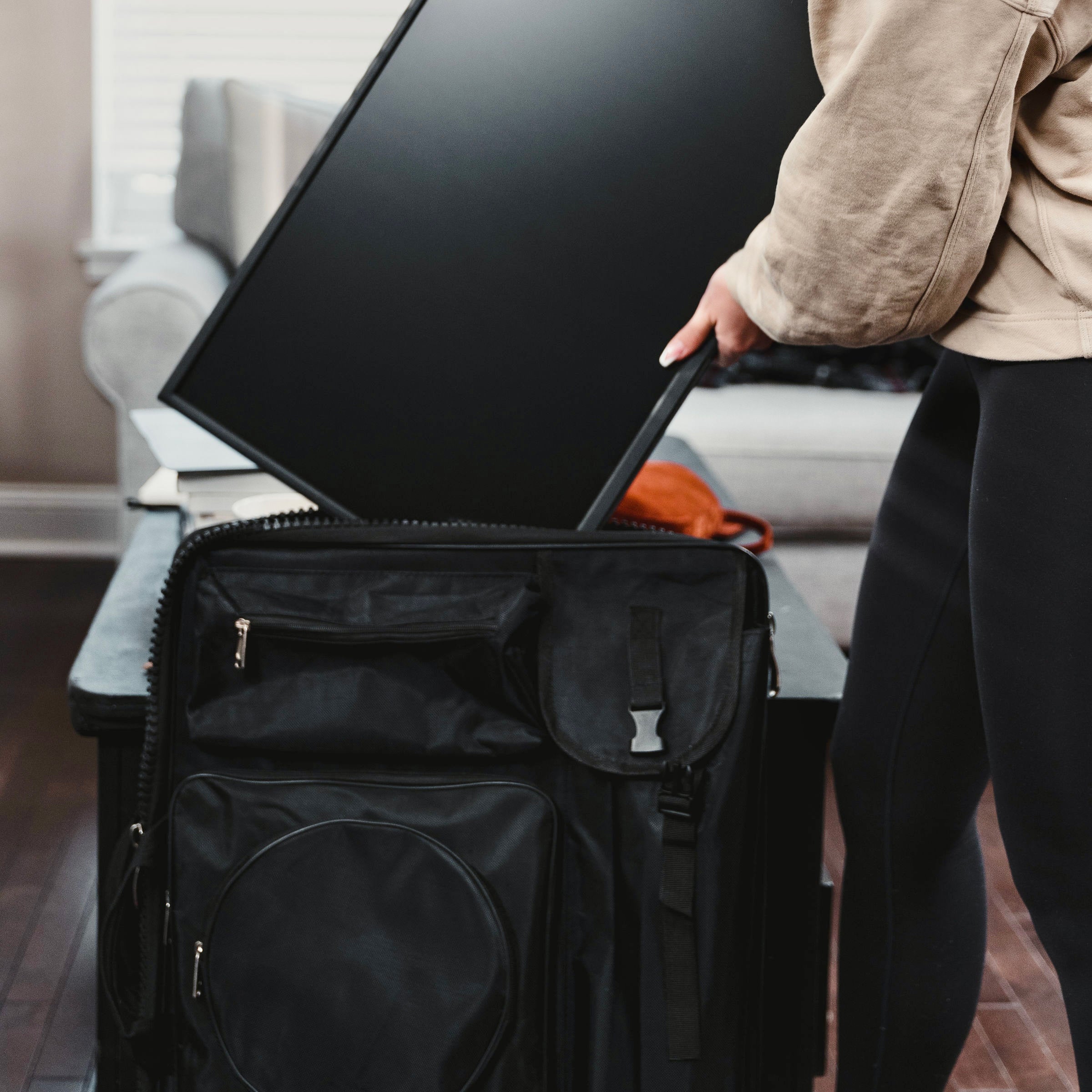
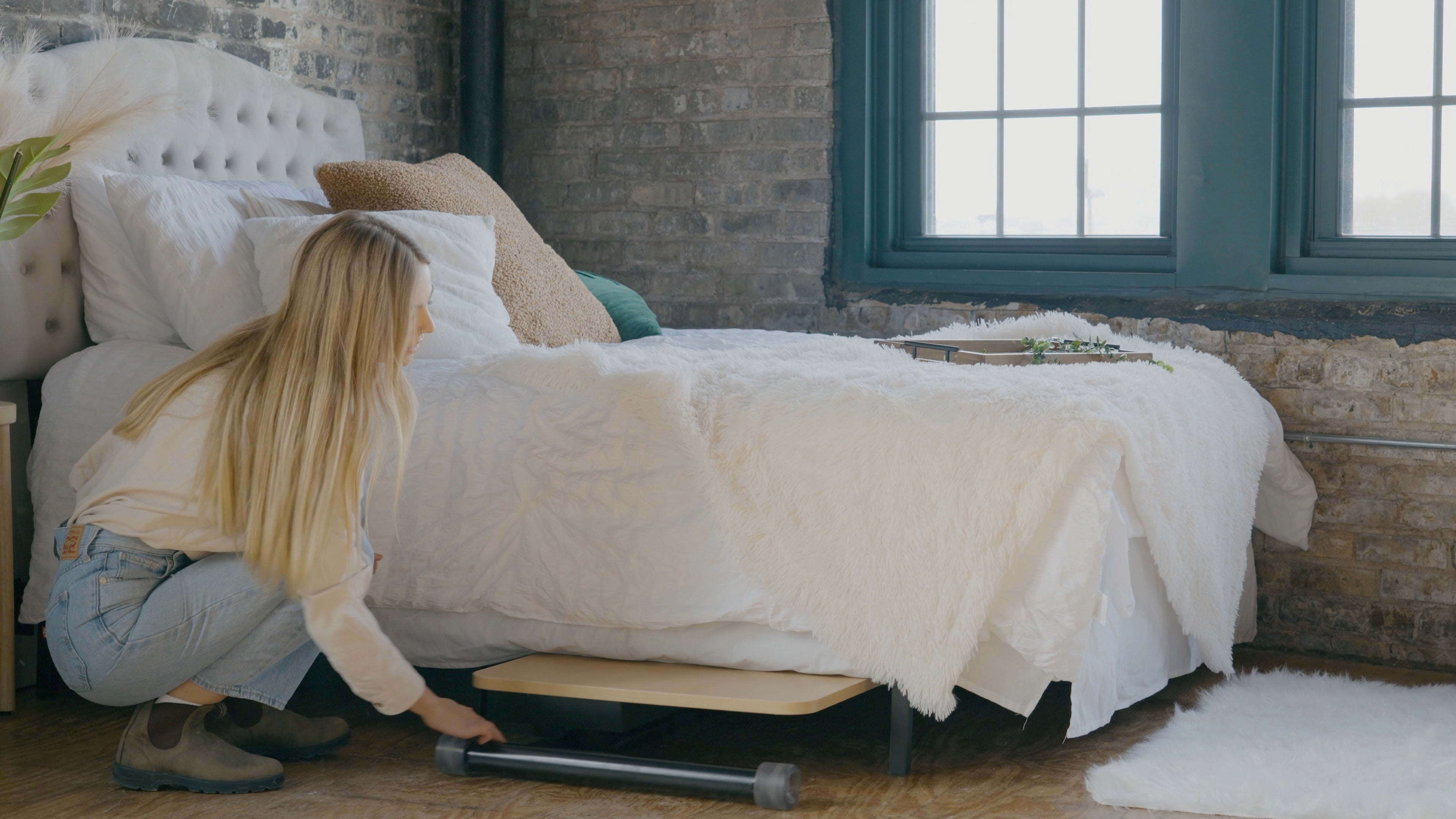
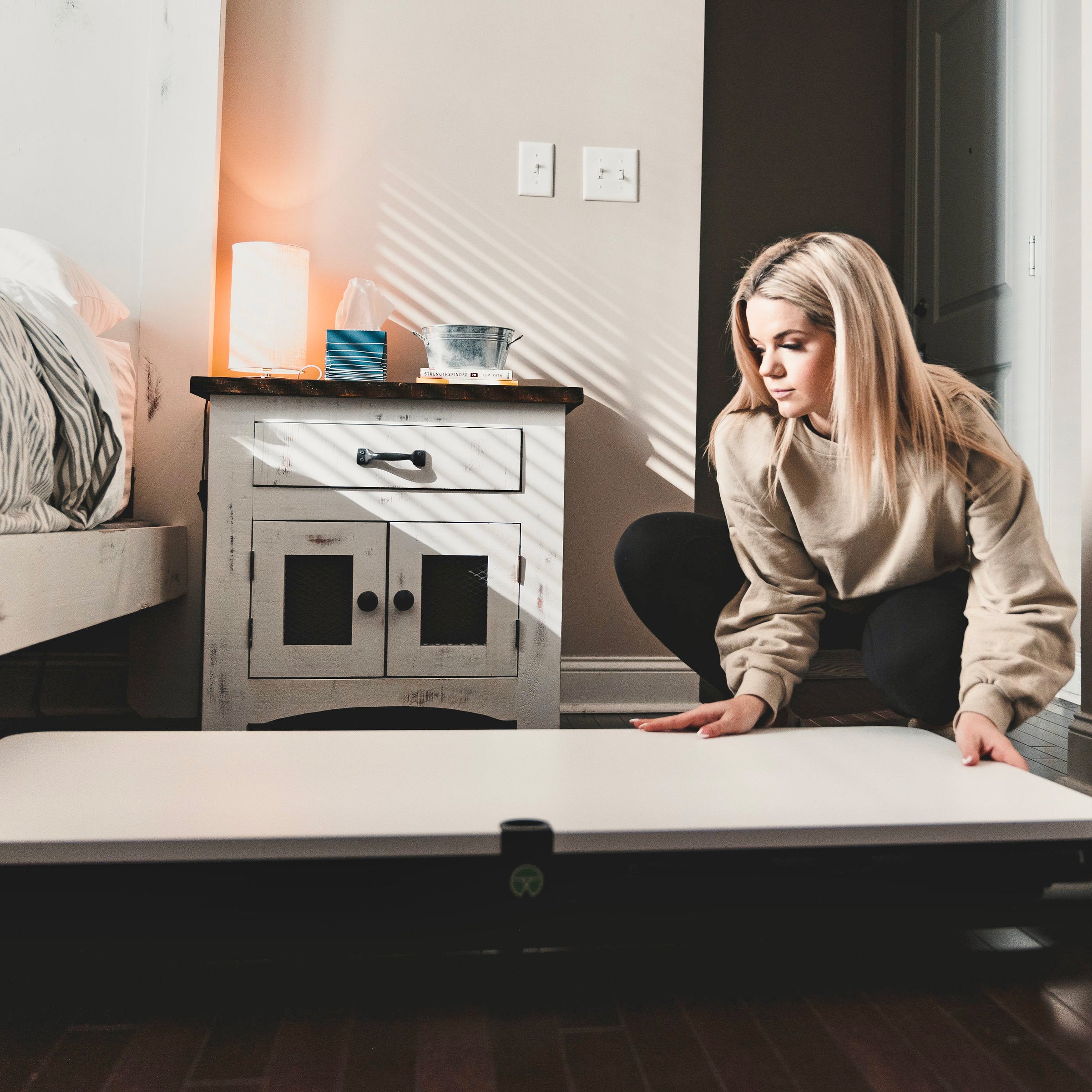
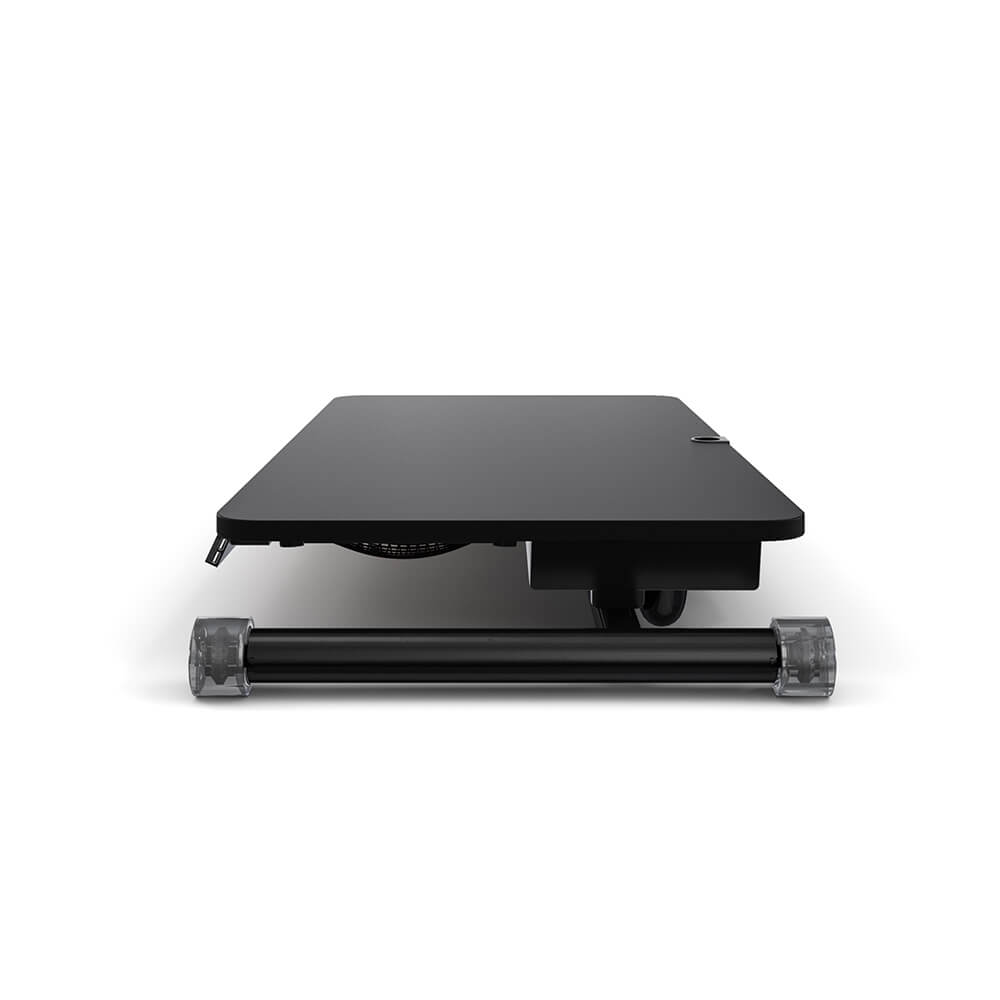
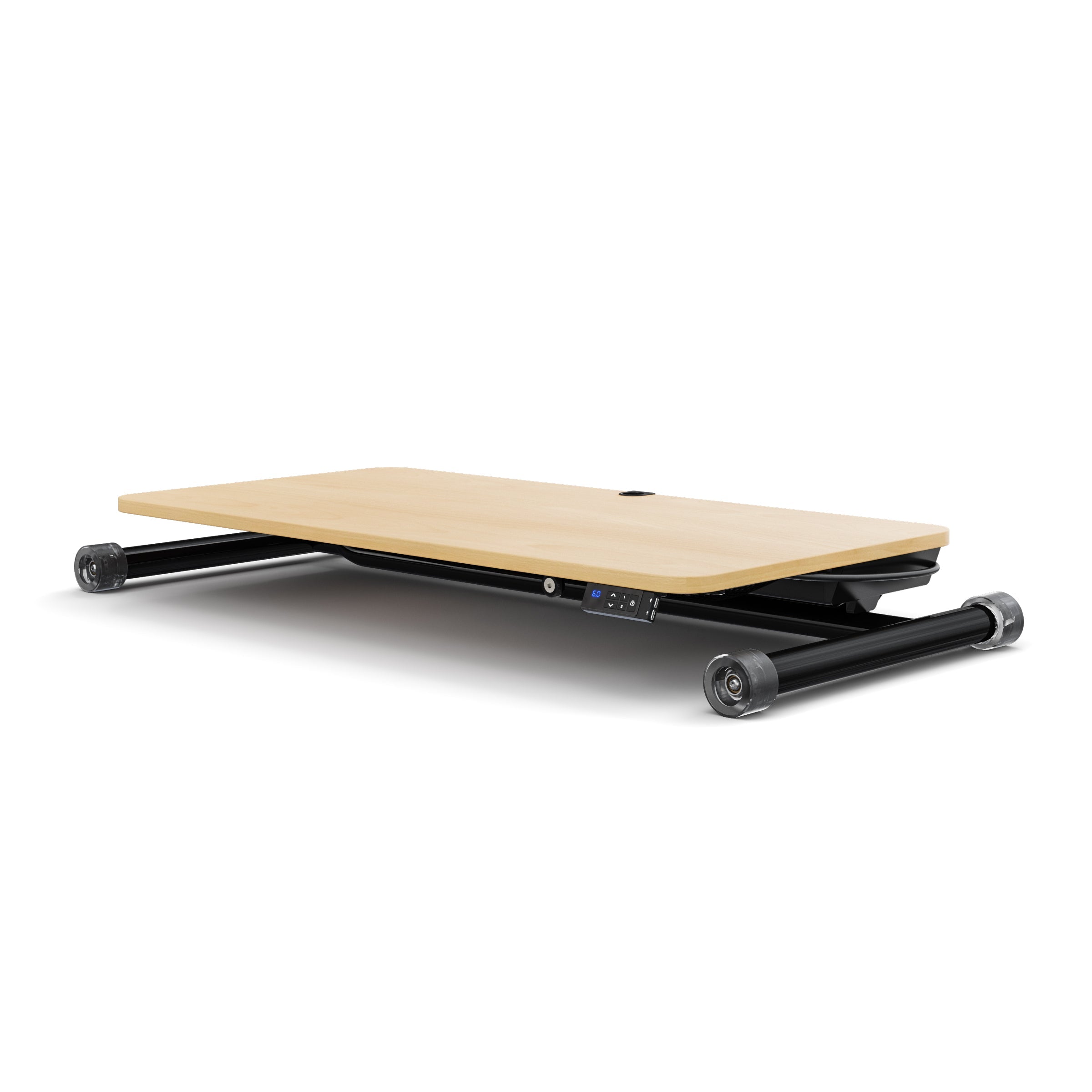
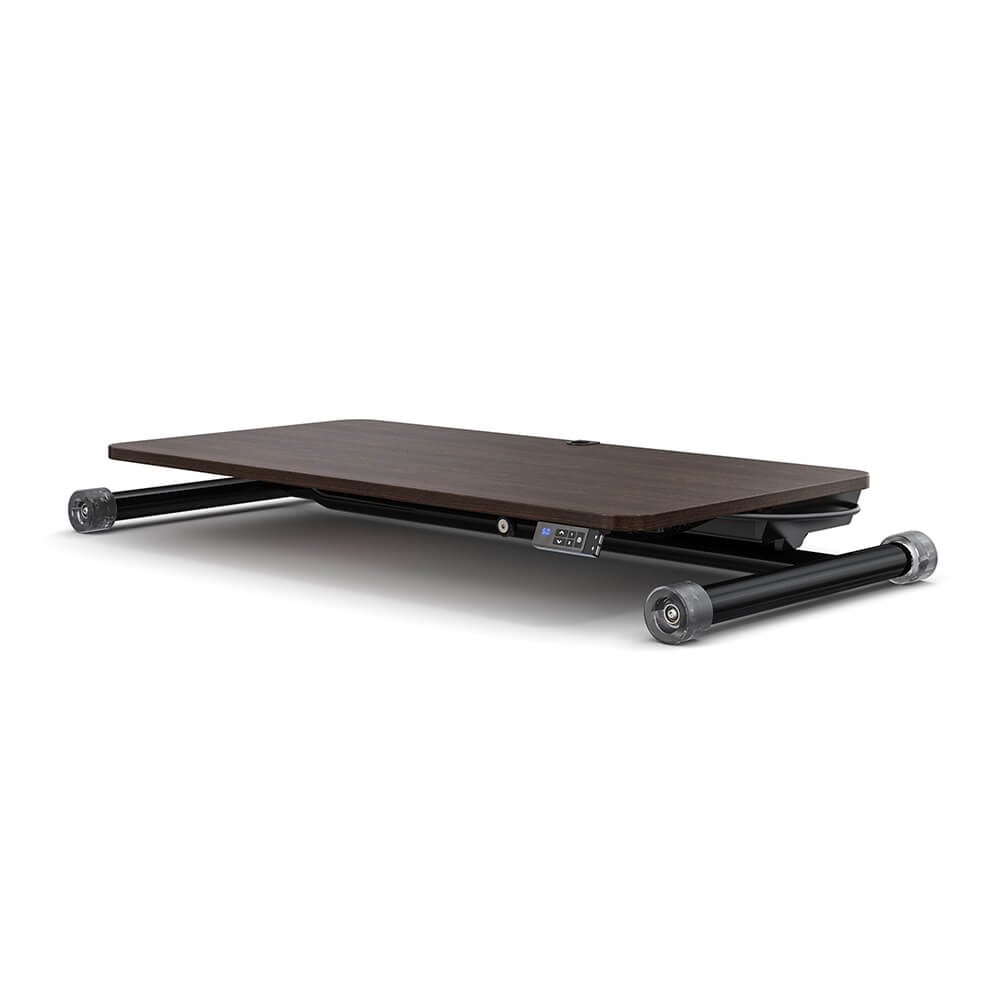
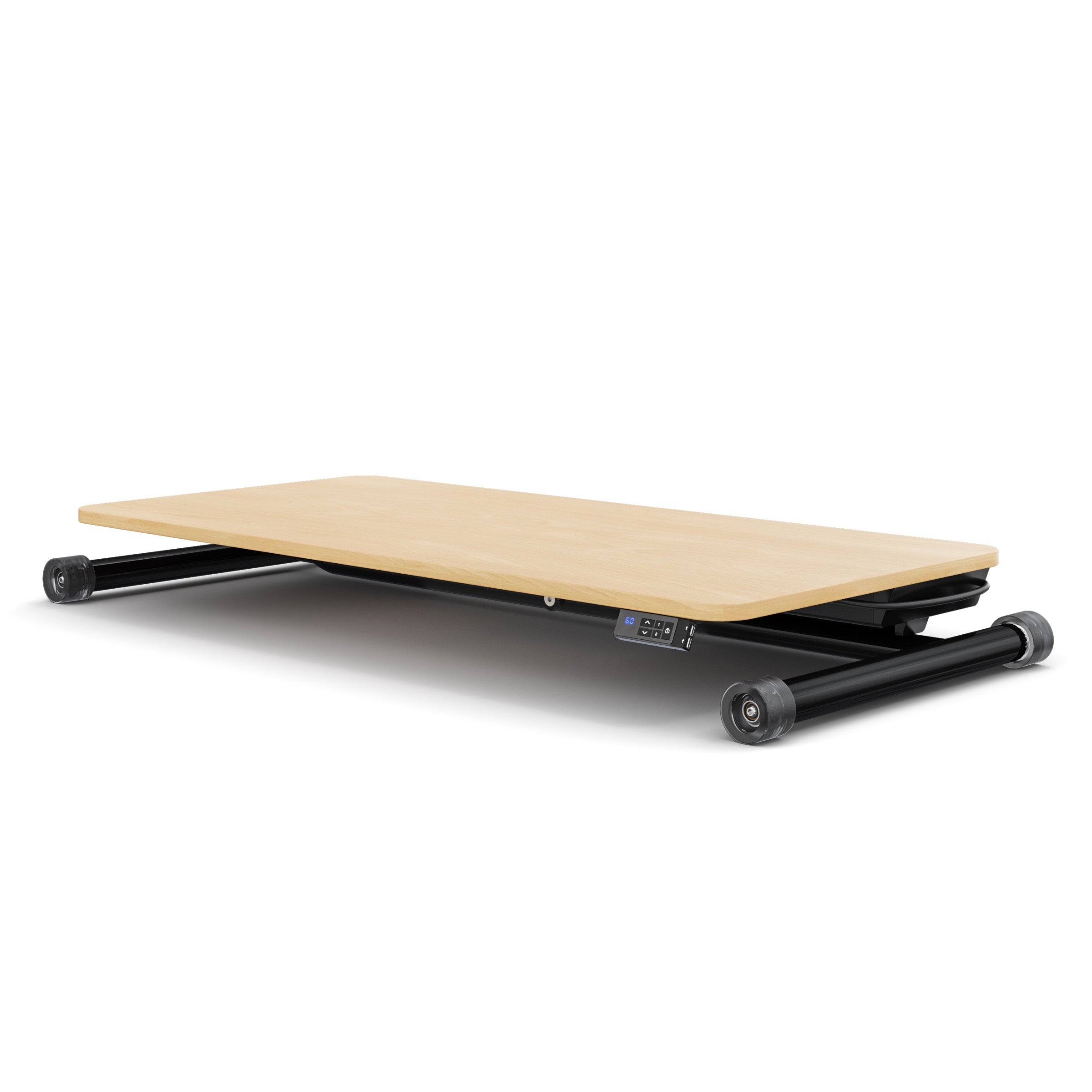
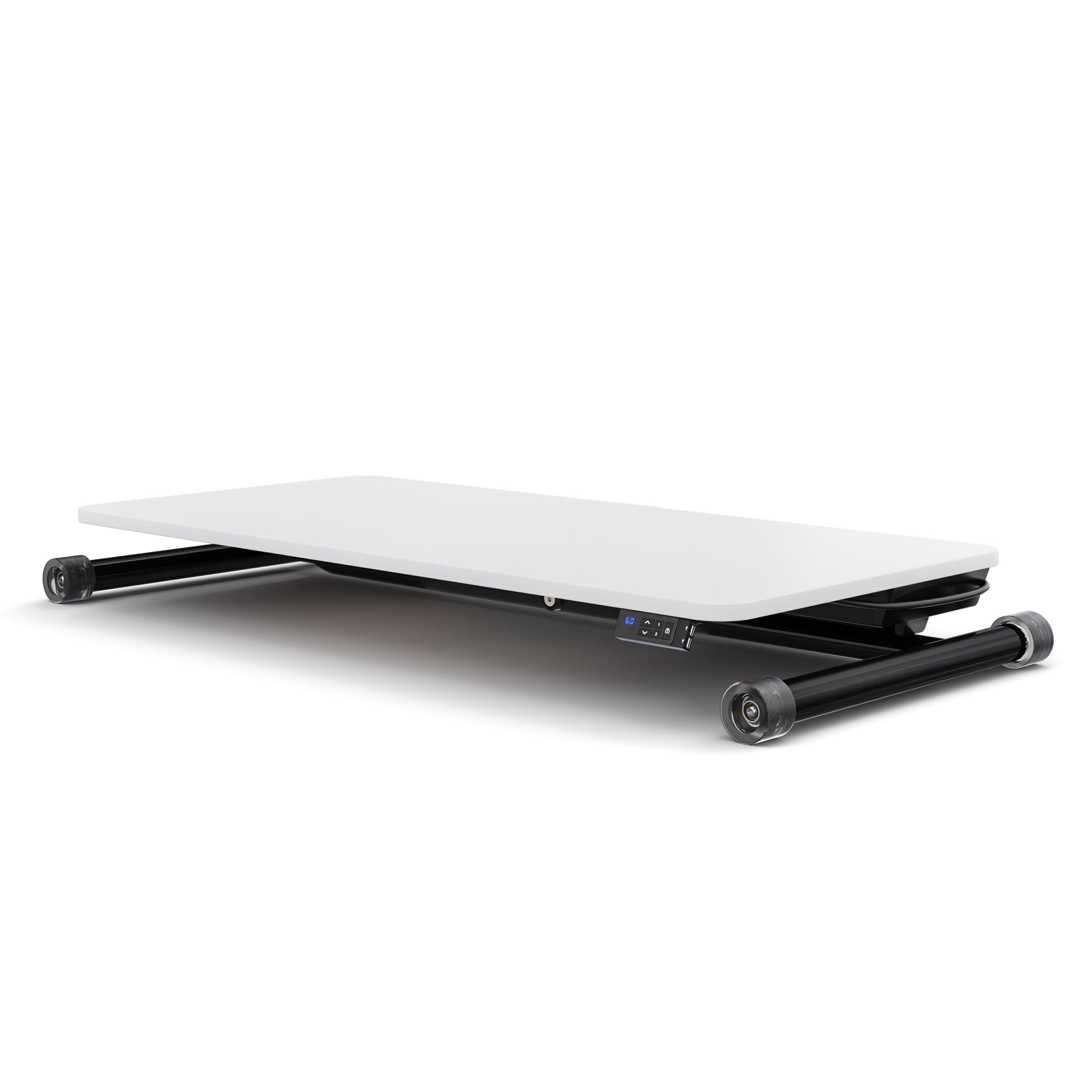
When the workday's done? Fold it flat and reclaim your valuable space. Slide it under the bed, couch, or into a closet.
More movement. Less clutter. Total freedom.
Lillipad Foldable Desk
Lillipad foldable desk is the world's only foldable desk with a full electric height range of 6" to 48". Work from the floor, a chair, or standing — this foldable desk adjusts to the way you want to work, not the other way around.
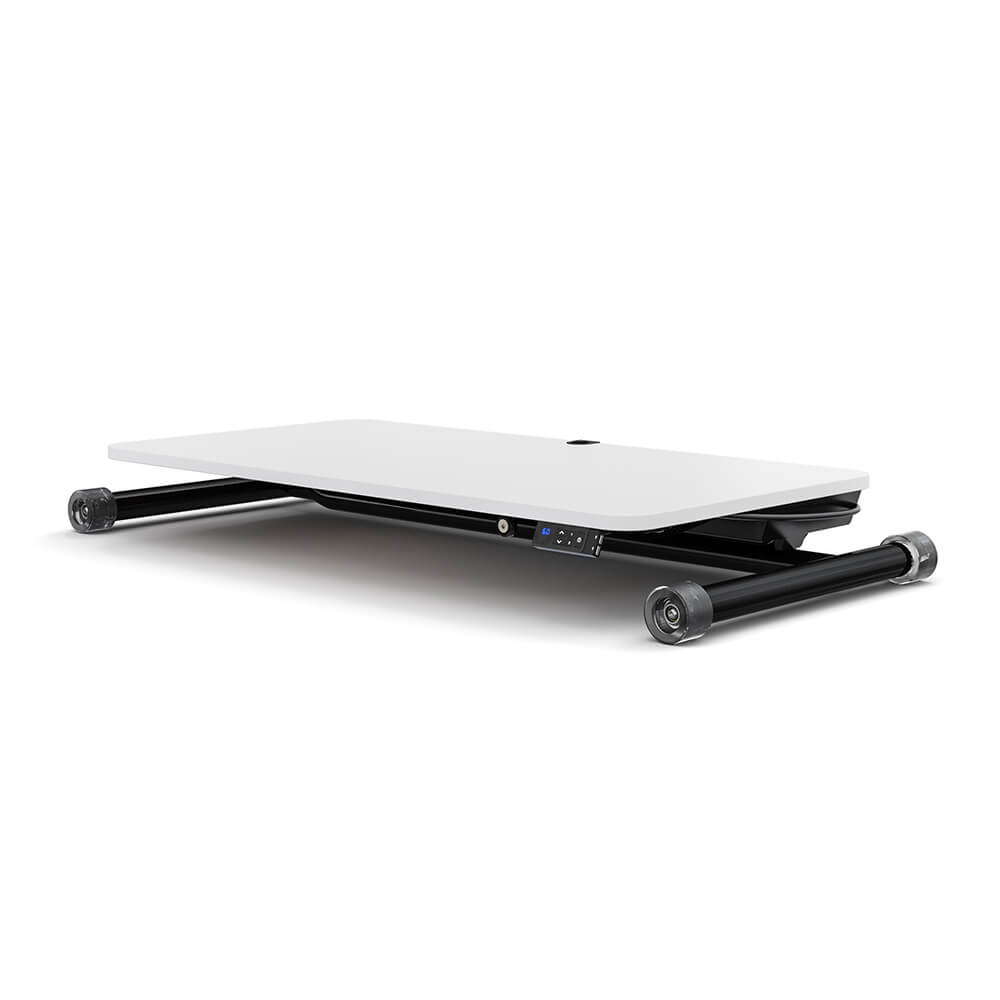
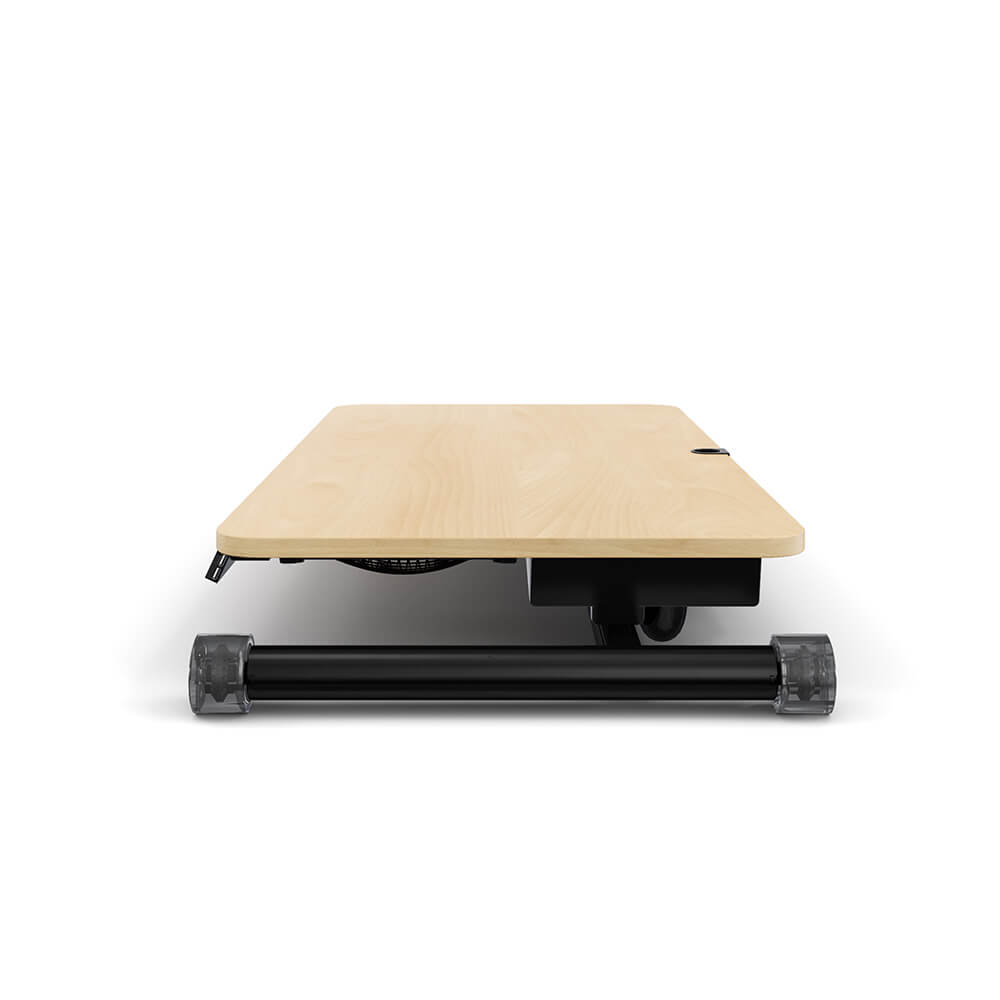
Built with a patented X-frame, the Lillipad folds completely flat to just 6 inches when your workday is done. Slide it under a bed, behind a couch, or into a closet. No permanent space required. No assembly required — every desk arrives fully built and ready to use right out of the box.
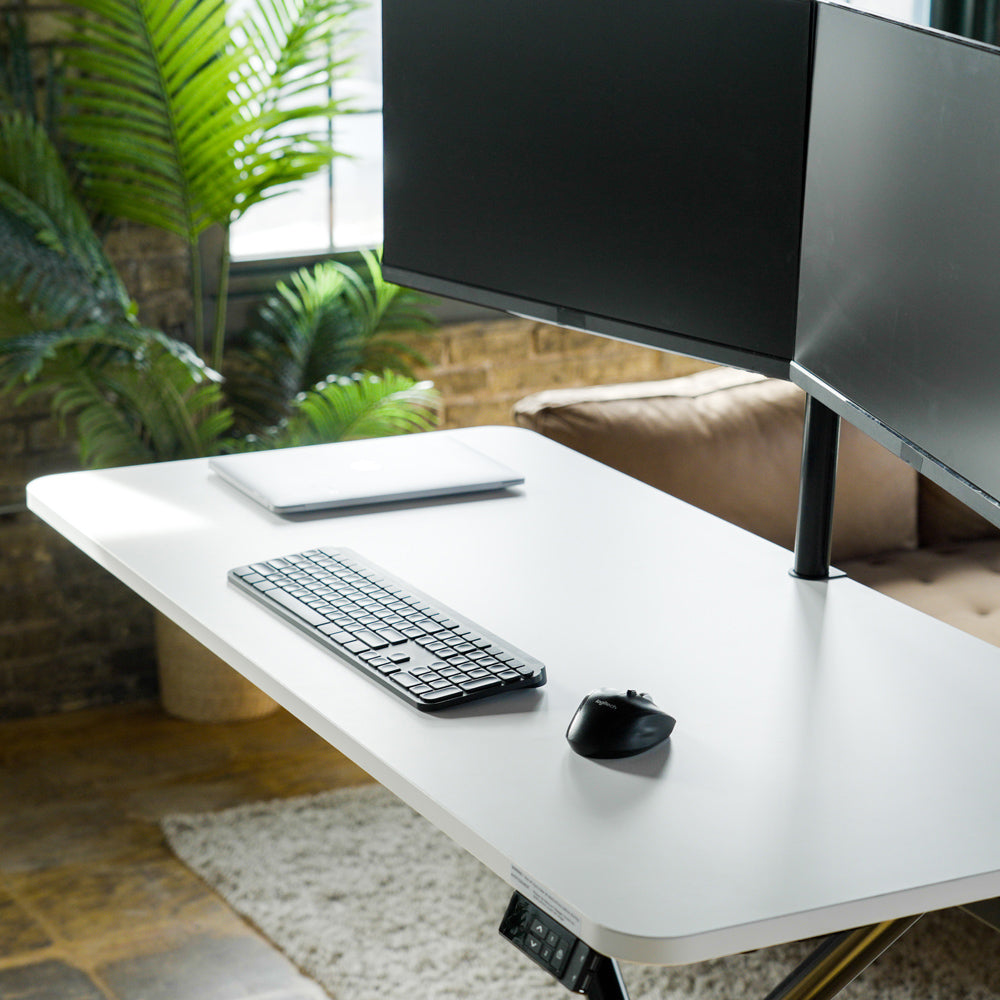
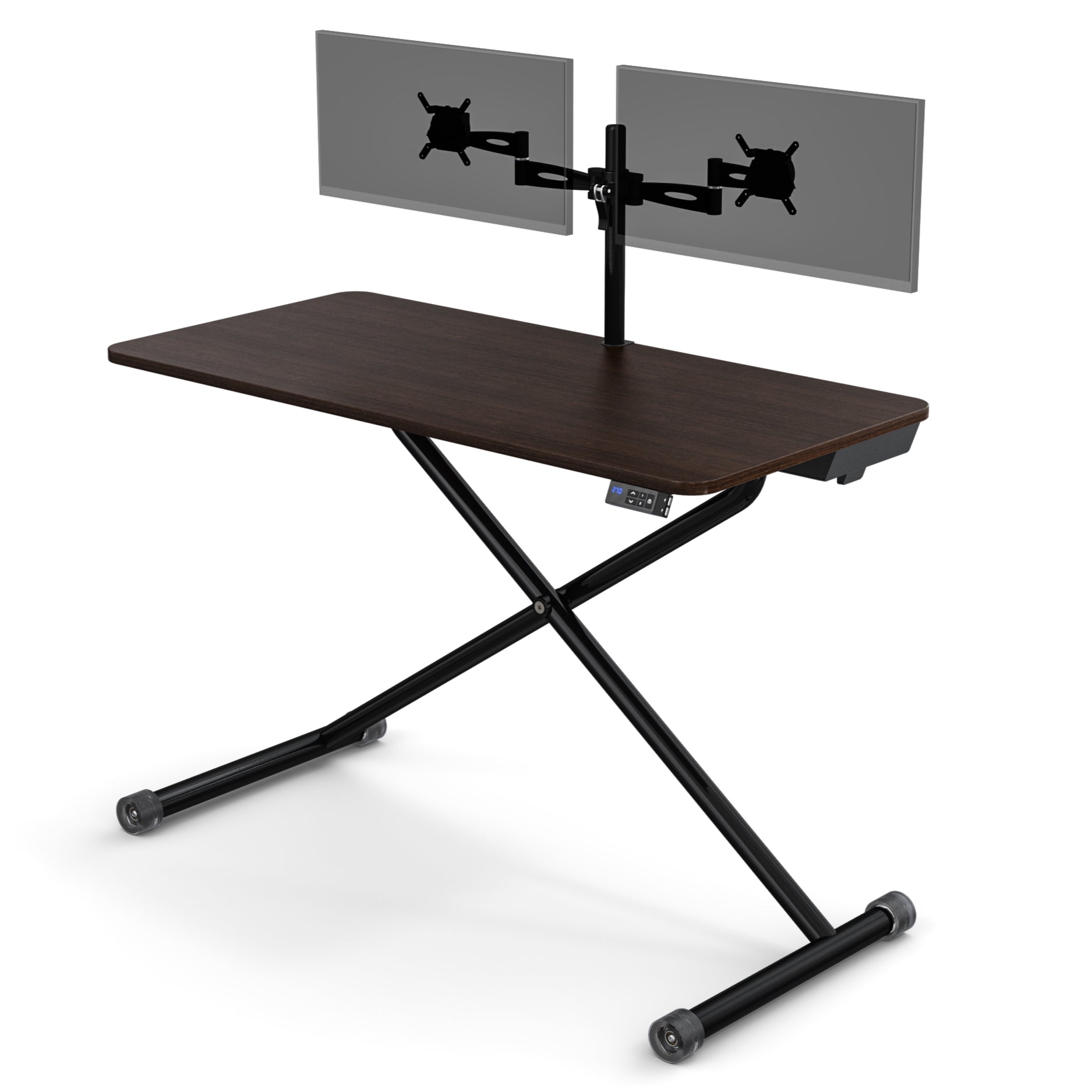
Unlike a traditional folding desk or fold-down wall desk, the Lillipad is engineered for real work. It supports laptops, full desktop monitors, and dual-screen setups with a stable, wobble-free surface at every height. The integrated wheels make it easy to roll between rooms, and the built-in brake keeps it locked in place when you need it stationary.
Whether you need a foldable desk for a small apartment, a home office that doubles as a living room, or a portable workstation you can set up anywhere — the Lillipad gives you the flexibility of a folding desk with the performance of a premium standing desk.
More movement. Less clutter. Total freedom.
Why the Lillipad Is the Best Foldable Desk for Your Home Office
Most foldable desks sacrifice stability for portability. Flimsy folding tables wobble under the weight of a monitor. Wall-mounted fold-down desks lock you into one height and one location. The Lillipad was built to solve both problems — a foldable desk that's strong enough for all-day work and compact enough to disappear when you're done.
Every Lillipad is Intertek certified and conforms to UL962, the safety standard for home office furnishings. It's static load tested to hold 700 lbs and cycle tested through 3,000+ consecutive height adjustments at full load. This isn't a temporary folding table — it's a professional-grade foldable desk built with industrial materials in Milwaukee, Wisconsin.
Three Working Positions in One Foldable Desk
The Lillipad is the only foldable desk that supports three distinct ergonomic positions:
-
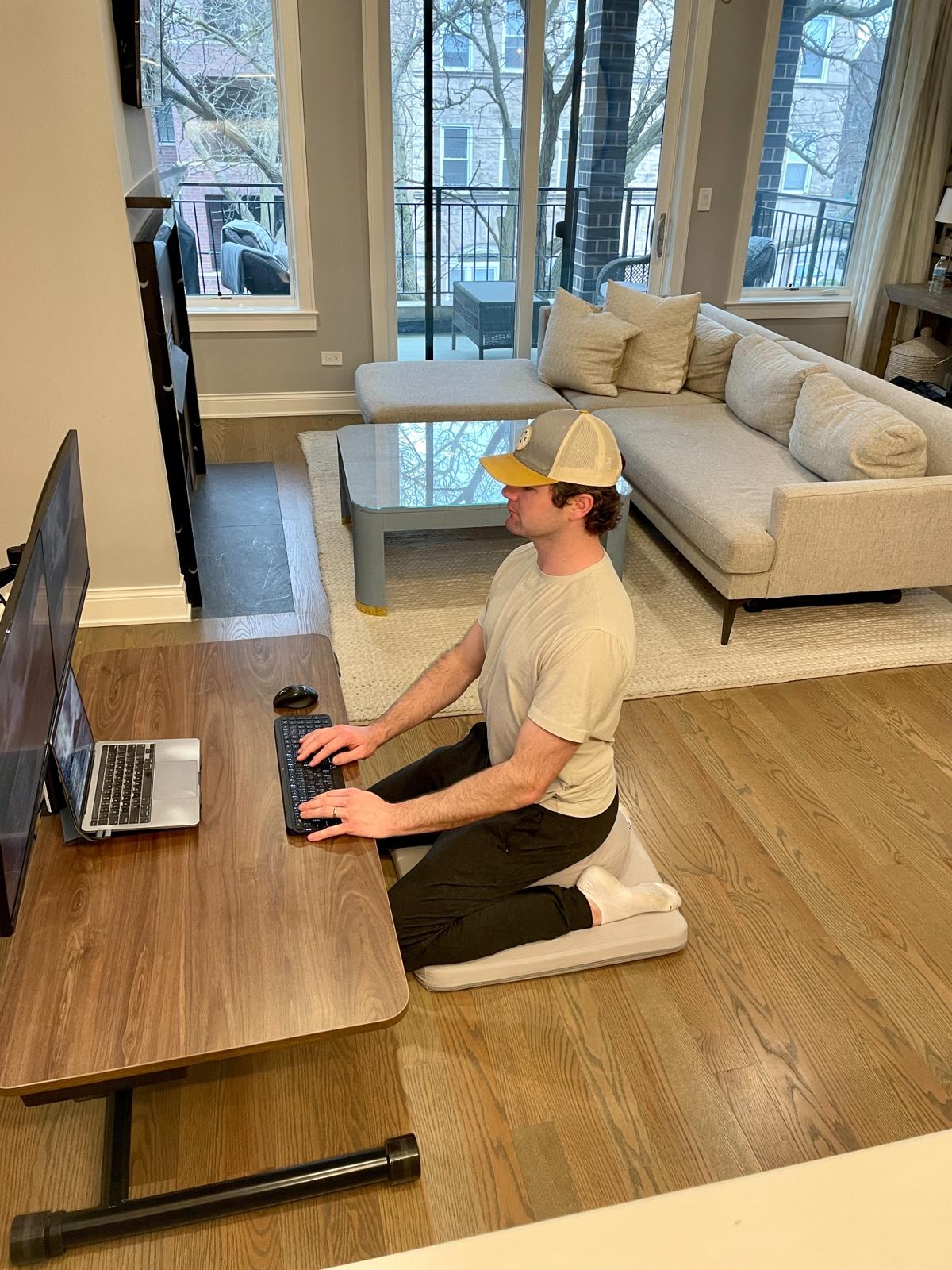
Floor sitting (6"–16"): Work cross-legged or with a floor cushion. Popular with meditators, yogis, and anyone who prefers ground-level work.
-
Chair sitting (17"–30"): Standard desk height for traditional office chairs, dining chairs, or stools.
-
Standing (31"–48"): Full standing height for users up to 6'5". Alternate between sitting and standing throughout the day to reduce fatigue and improve focus.
No other foldable desk on the market offers this range. Most adjustable desks start at 27" — the Lillipad starts at 6".
Folds Flat. Stores Anywhere.
When your workday ends, the Lillipad collapses to just 6 inches thick. That's thin enough to slide under a bed, stand behind a couch, or tuck into a closet. For studio apartments, shared bedrooms, dorm rooms, and multipurpose spaces, this changes everything. Your home office doesn't have to be permanent — it just has to be ready when you are.
No Assembly. No Tools. No Hassle.
Every Lillipad ships fully assembled in one box. Open it, unfold it, plug it in, and you're working. There are no legs to attach, no screws to tighten, and no instruction manuals to decode. Setup takes seconds, not hours.
Who Is the Lillipad Foldable Desk For?
The Lillipad was designed for people who need a real workspace but don't have room for a permanent desk — or simply prefer not to give up that space.
-
Remote workers in apartments, condos, or shared living spaces
-
Students in dorm rooms or small bedrooms
-
Content creators who film in the same room they work in
-
Hybrid workers who need an office that appears and disappears daily
-
Gamers who want a height-adjustable setup without a permanent desk footprint
-
Parents working from home in shared family spaces
How to Choose Your Lillipad Foldable Desk
PRO vs GO
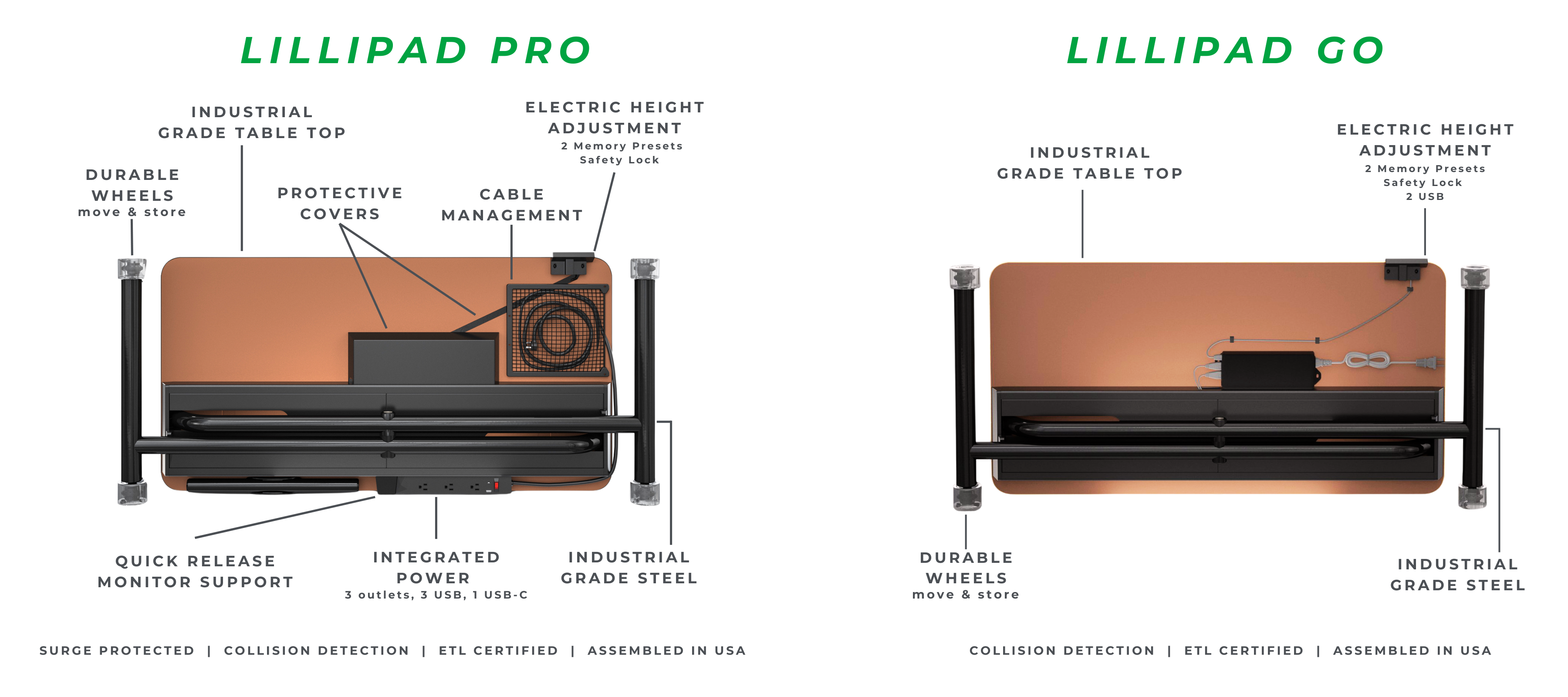
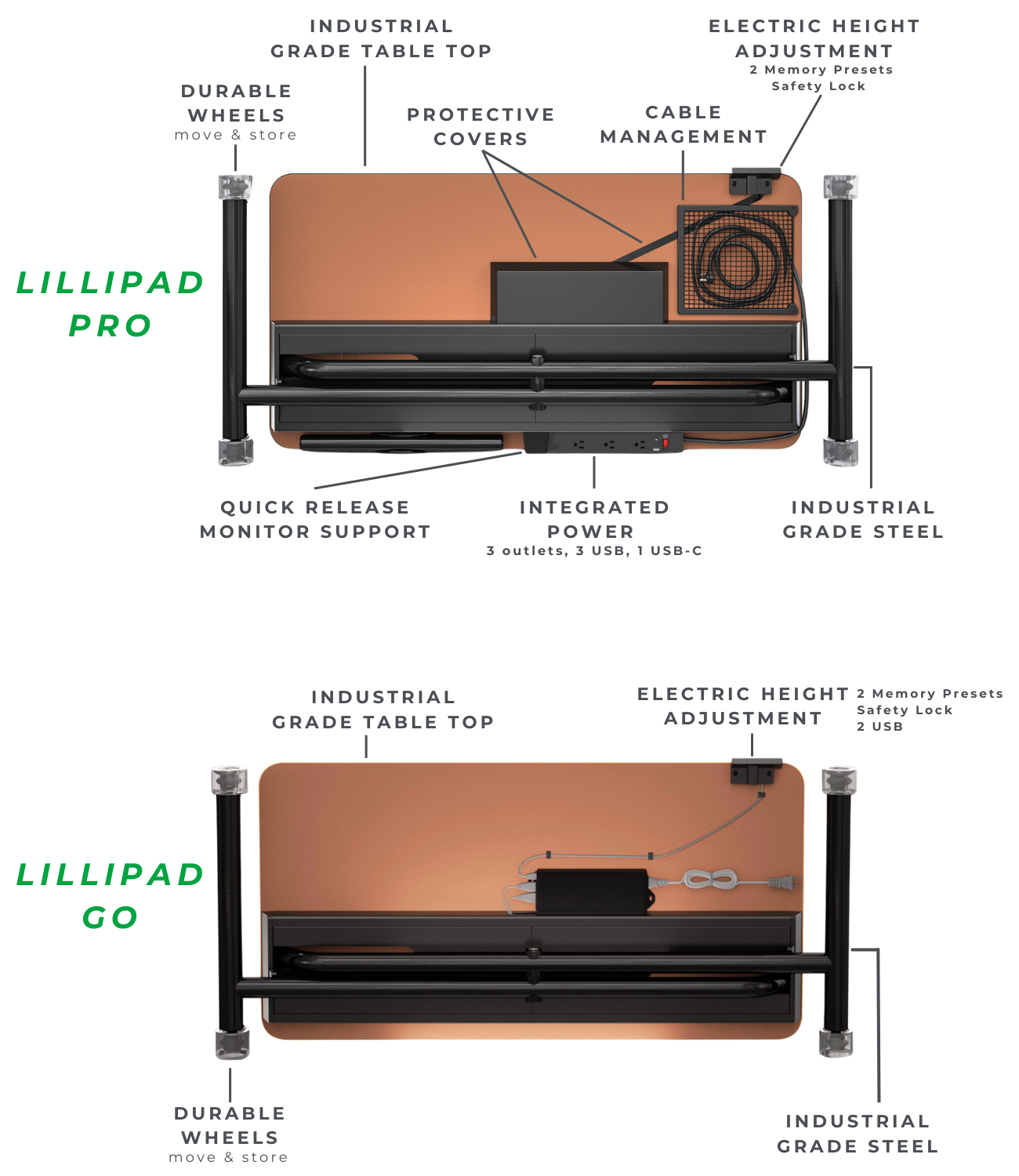
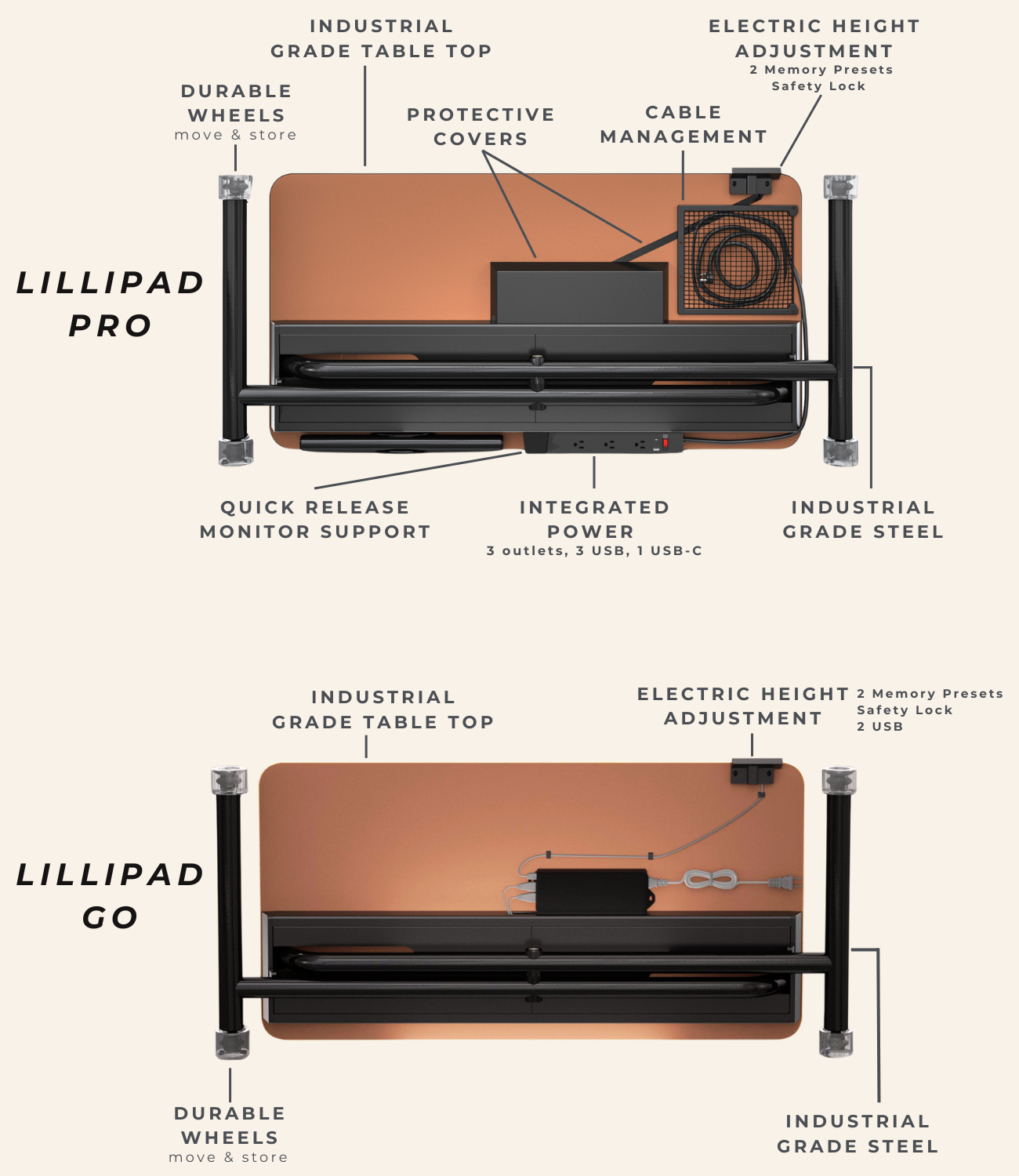
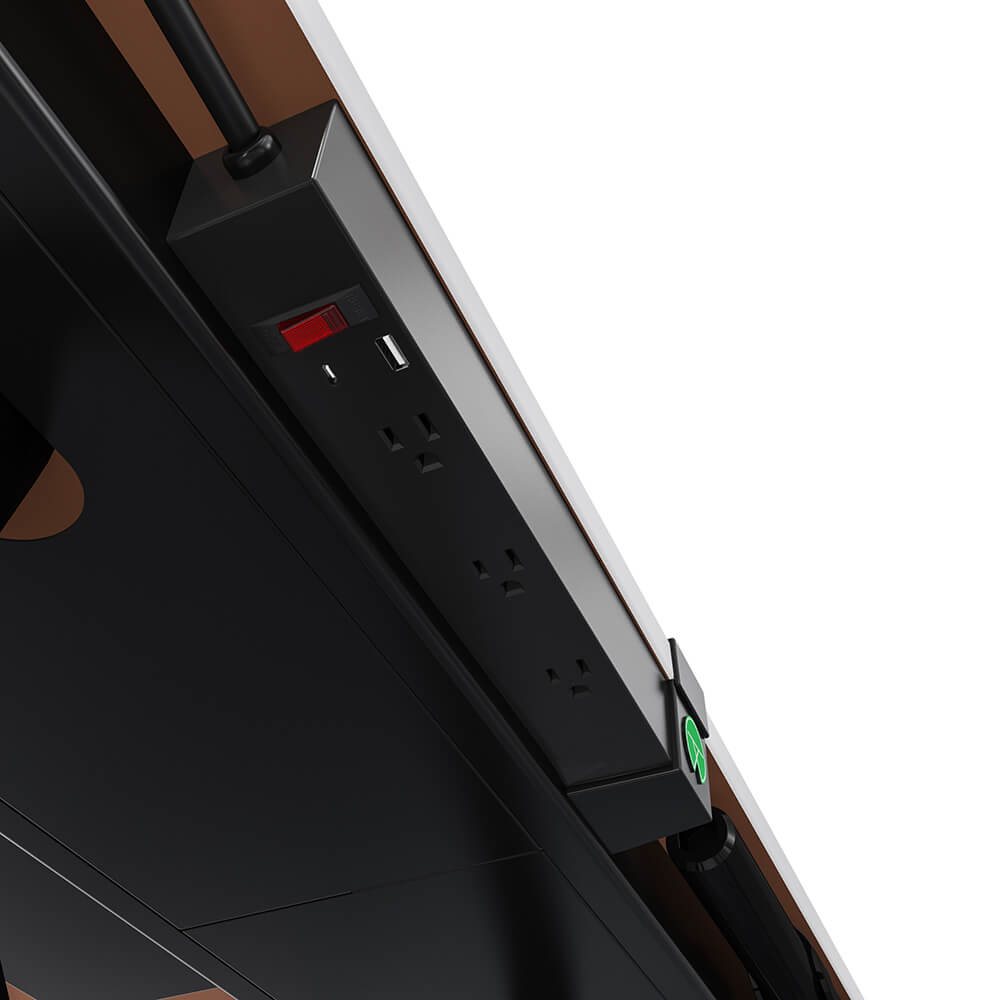
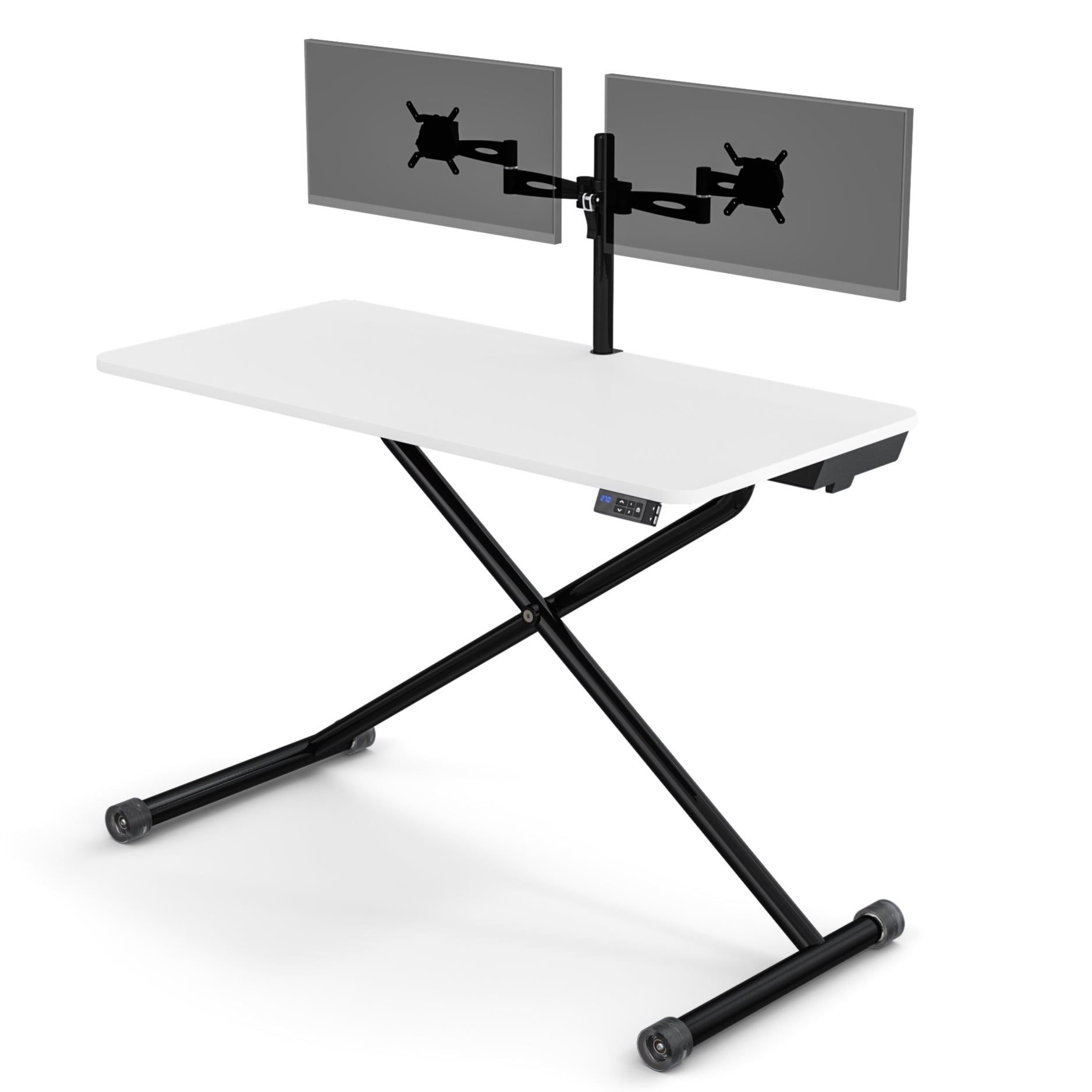
Both models share the same patented X-frame, the same electric motor, and the same height range. The PRO adds a built-in surge protector (3 AC outlets, 3 USB, 1 USB-C), monitor arm support, cable concealment panels, and a cable management net. If you're running a multi-monitor setup or want a completely clean workspace, go PRO. If you just need the core foldable desk experience, the GO delivers it at a lower price.
Standard vs Large
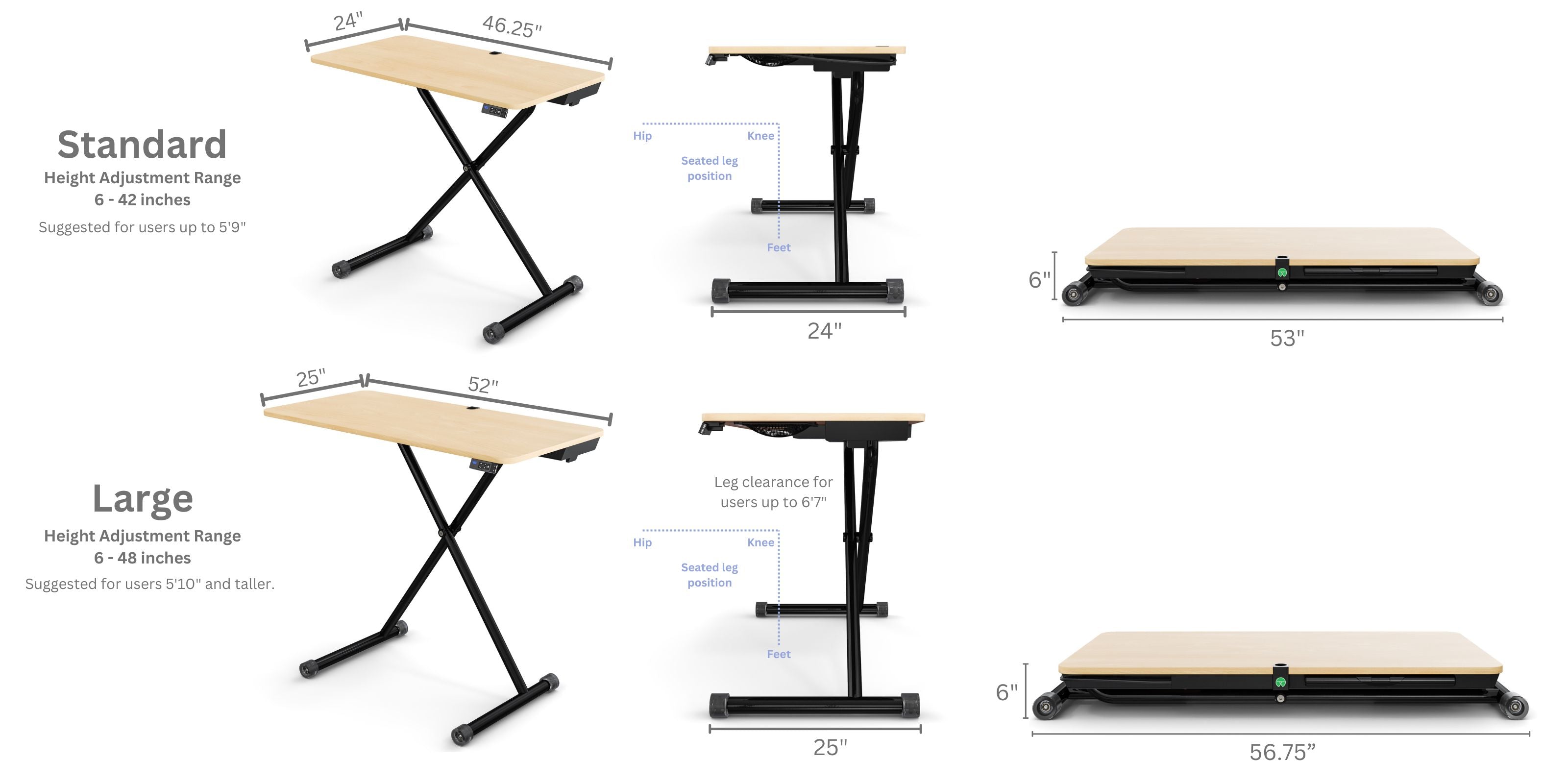
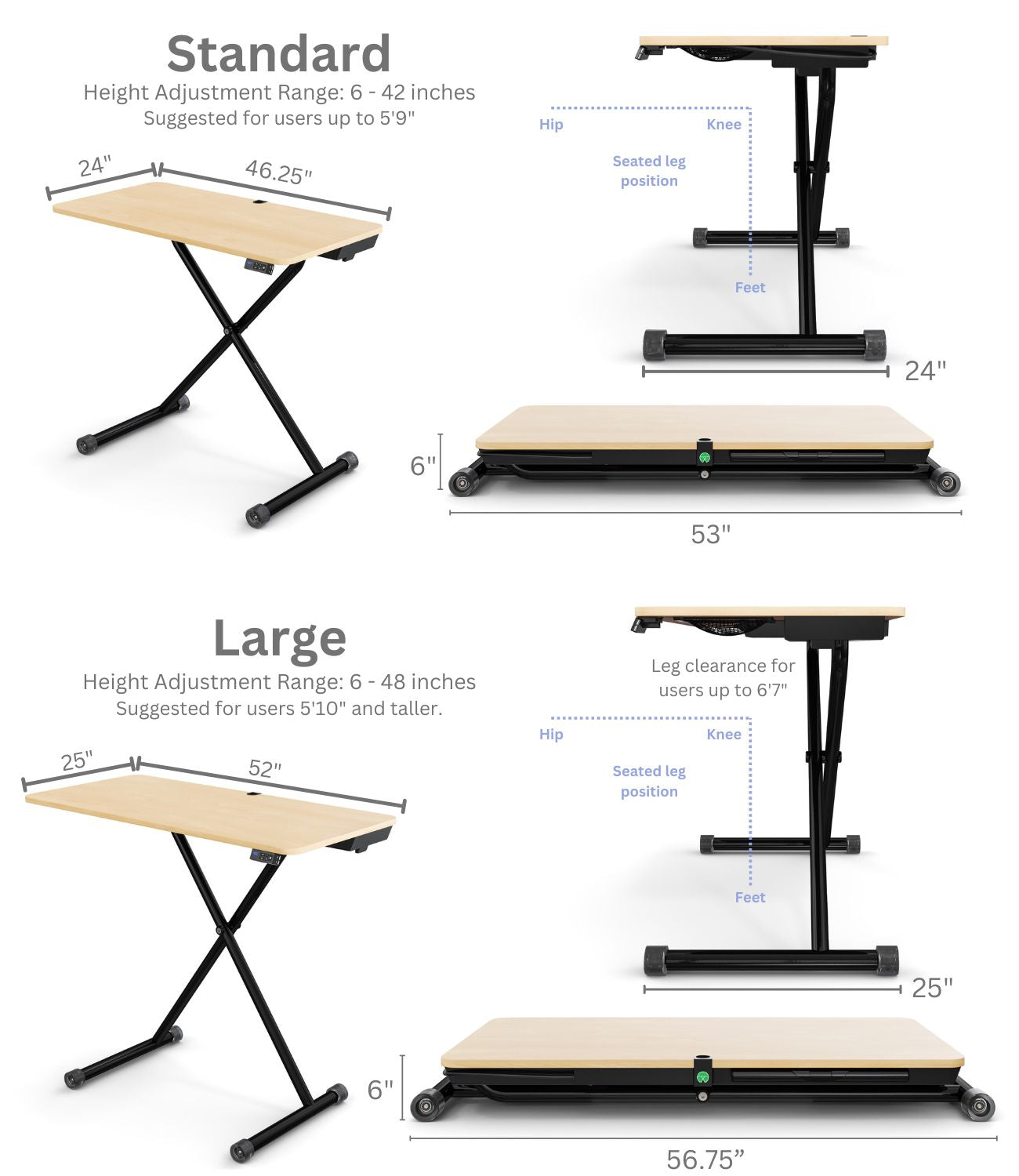
The Standard model (46" x 24" desktop, max height 42") is recommended for users 5'9" and under. The Large model (52" x 25" desktop, max height 48") is better suited for users 5'10" and taller or anyone running a wider monitor setup. Both fold flat for storage.
Foldable Desk FAQ
What is the best foldable desk for small spaces?
The Lillipad is specifically designed for small spaces. It collapses to just 6 inches flat — thin enough to slide under a bed, behind a couch, or into a closet. When you need to work, it rolls out on integrated wheels and adjusts from floor height to full standing height in seconds. It's ideal for studio apartments, shared rooms, dorm rooms, or any space where a permanent desk isn't practical.
How much weight can a foldable desk hold?
The Lillipad has an operational load rating of 75 lbs, which comfortably supports a laptop, monitor, keyboard, and desk accessories. It's also been static load tested to hold 700 lbs, so there's no risk of collapse or instability during normal use.
Is a foldable desk sturdy enough for daily work?
The Lillipad is built with industrial-grade steel and a patented X-frame that provides stability at every height — from 6" all the way to 48". It passed all required stability, durability, and tip tests for UL962 certification. This is a professional-grade foldable desk, not a temporary folding table.
Can I use a foldable desk with a monitor?
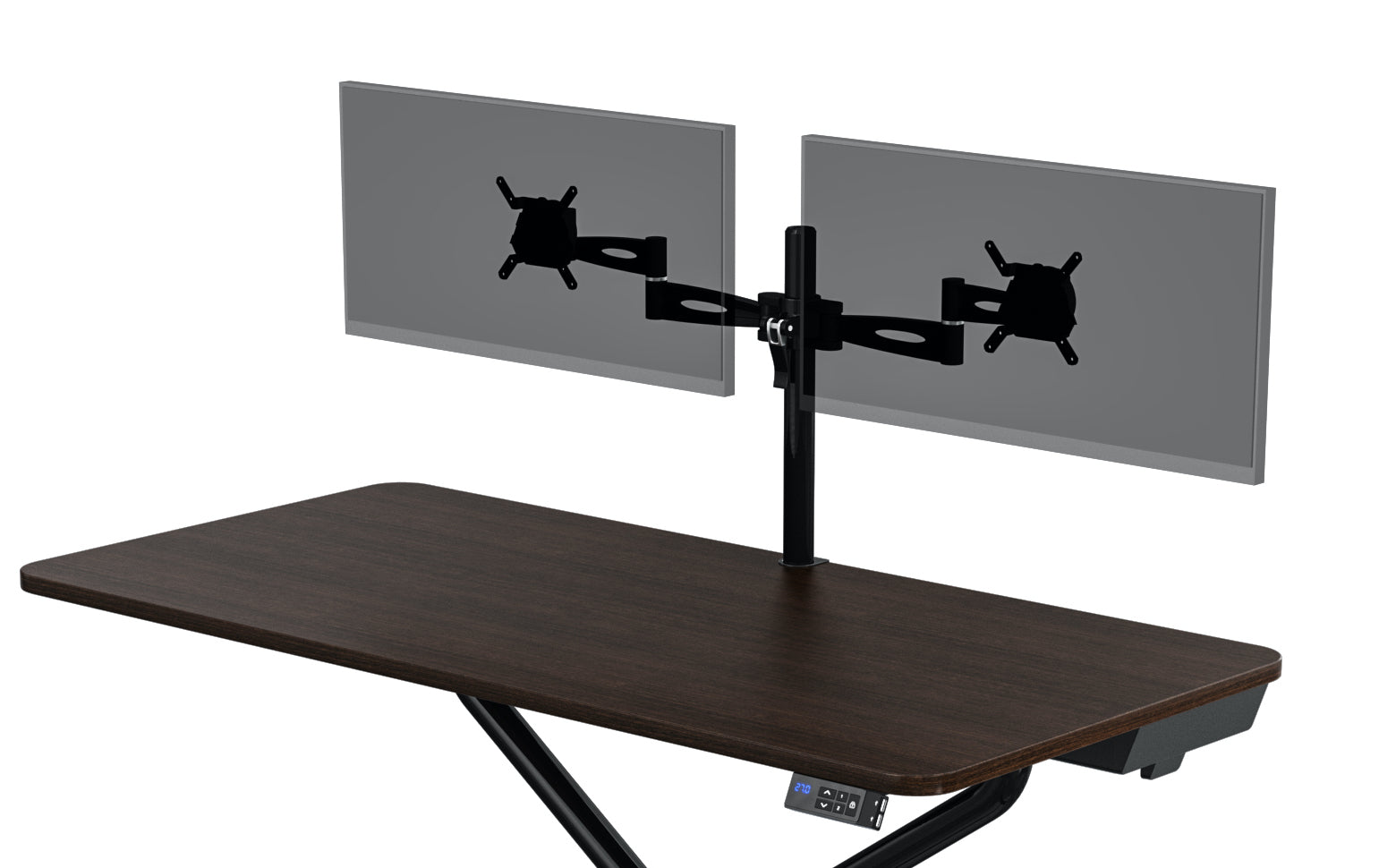
Yes. The Lillipad PRO model includes built-in monitor arm support compatible with single and dual monitor arms. The stable desktop surface handles full-size monitors without wobble, even at standing height. Monitor arms are sold separately so you can customize your setup.
How thin does a foldable desk fold?
The Lillipad folds to just 6 inches thick — the thinnest collapsed profile of any electric height-adjustable desk on the market. It stores vertically or horizontally and fits in spaces most people wouldn't think to use.
Floor Desks: Working Heights, Frame Specs, and Storage
Floor desks put the work surface between roughly 13 and 20 inches off the ground, low enough to work cross-legged or kneeling. Almost no adjustable desk reaches that far down. Standard sit-stand frames stop near 27 inches, which leaves floor work to fixed low tables with no way to rise afterward. Height range, crossbar clearance, and folded thickness decide whether a floor desk holds up across a full day.
Floor Desks and the Travel Range They Require
Floor work has its own measurements, and they sit far below what most desk listings cover. The distance between floor height and standing height is the whole engineering problem.
- Cross-legged working height falls between 13 and 18 inches for most adults.
- Kneeling and seiza positions run higher, near 16 to 20 inches.
- Chair-height work needs 28 to 30 inches.
- Standing work needs 38 to 48 inches depending on user height.
- One frame covering all three spans roughly 35 inches of vertical travel.
Most electric desks travel 20 to 25 inches and start at 27. That covers seated and standing and never approaches the floor. Fixed floor tables reach the bottom of the range and stay there permanently.
Three Working Positions From a Single Frame
Covering floor, chair, and standing height in one product takes an unusual amount of travel. Our patented X-frame was built around that requirement rather than adapted to it.
Floor Sitting
Ground-level work needs leg clearance as much as it needs a low surface.
- Suggested working height starts at 13.5 inches on both sizes, tabletop included.
- Cross-legged, kneeling, and extended-leg positions all clear the frame.
- Crossbar interference only becomes a factor above roughly 6 feet 7 inches.
- Our co-founders stand 6 feet 4 inches and 6 feet 6 inches, which set the clearance target during design.
Chair Sitting
The middle of the range covers conventional desk work with any seat.
- Standard desk height near 29 inches sits comfortably inside the travel.
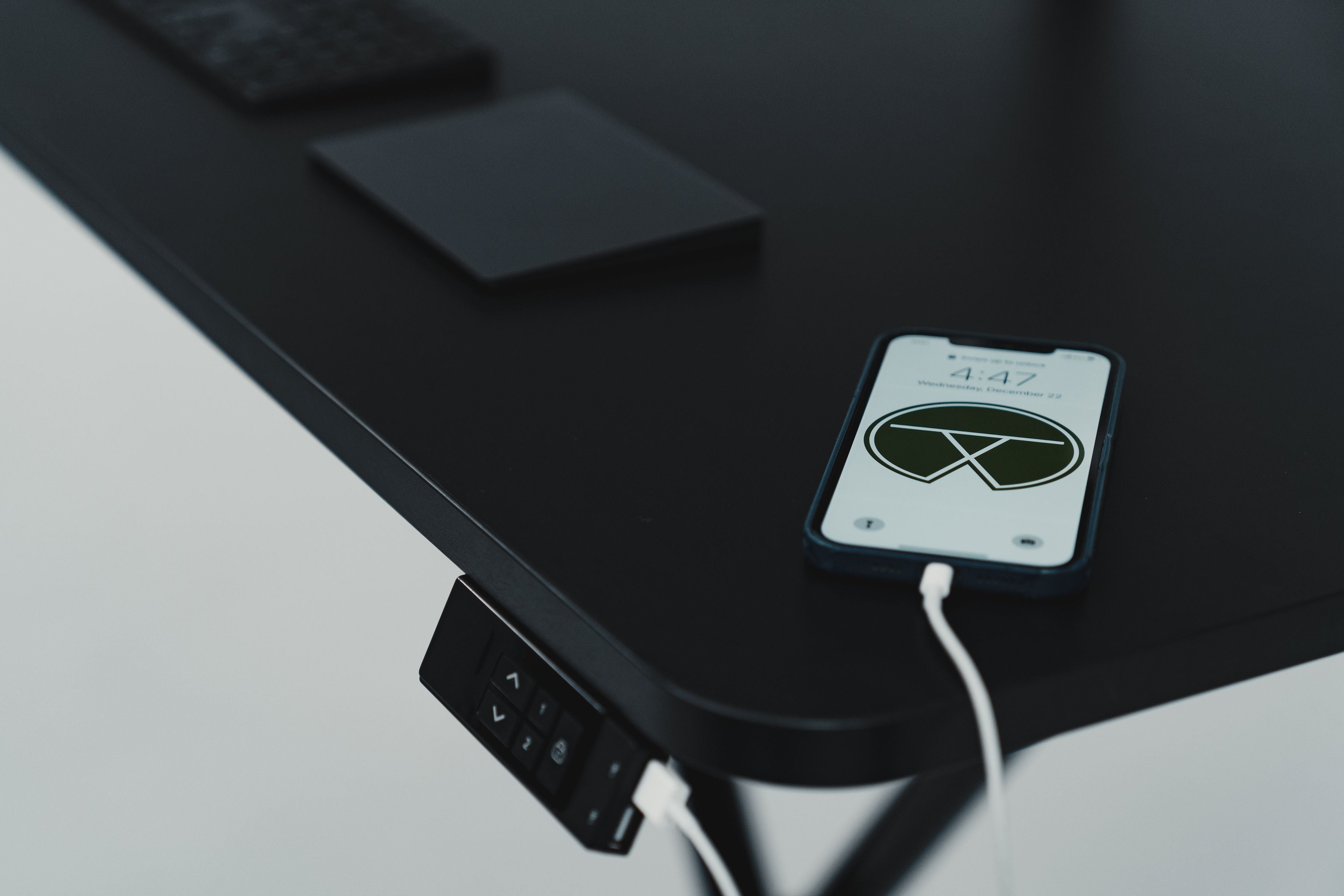
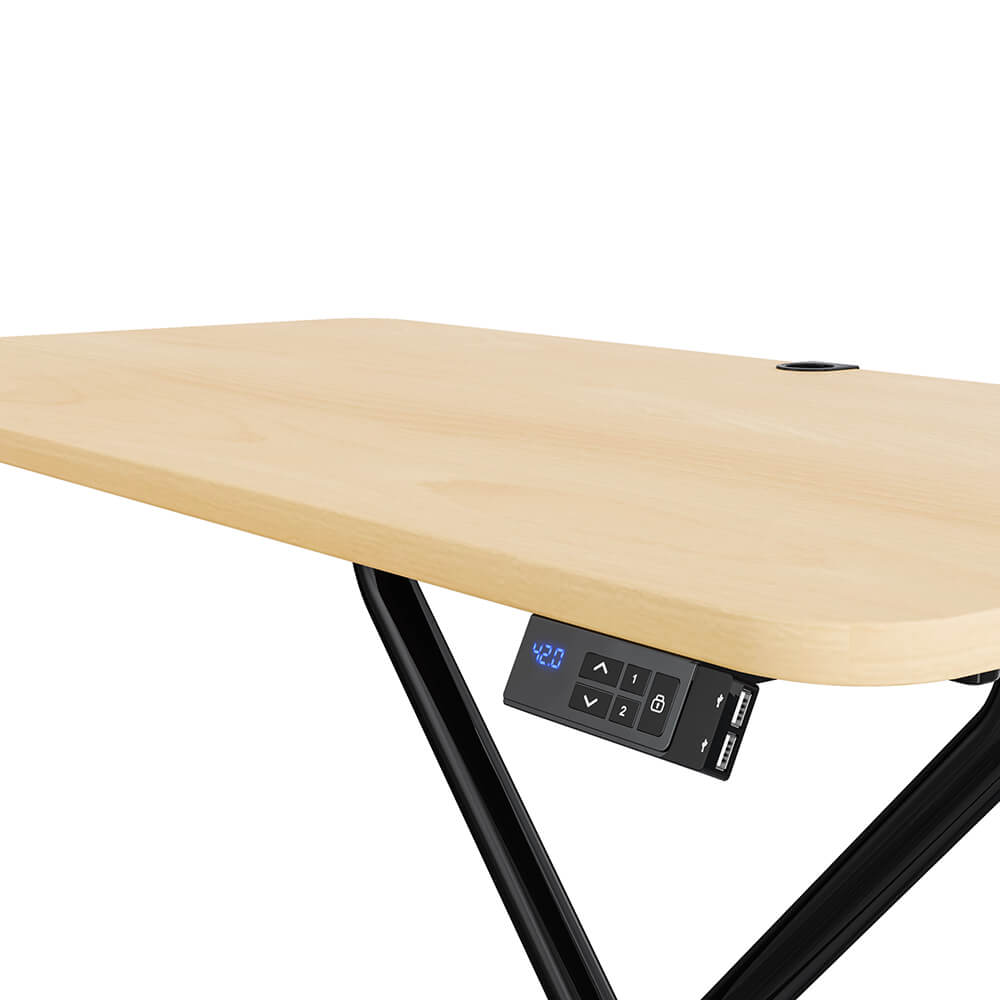
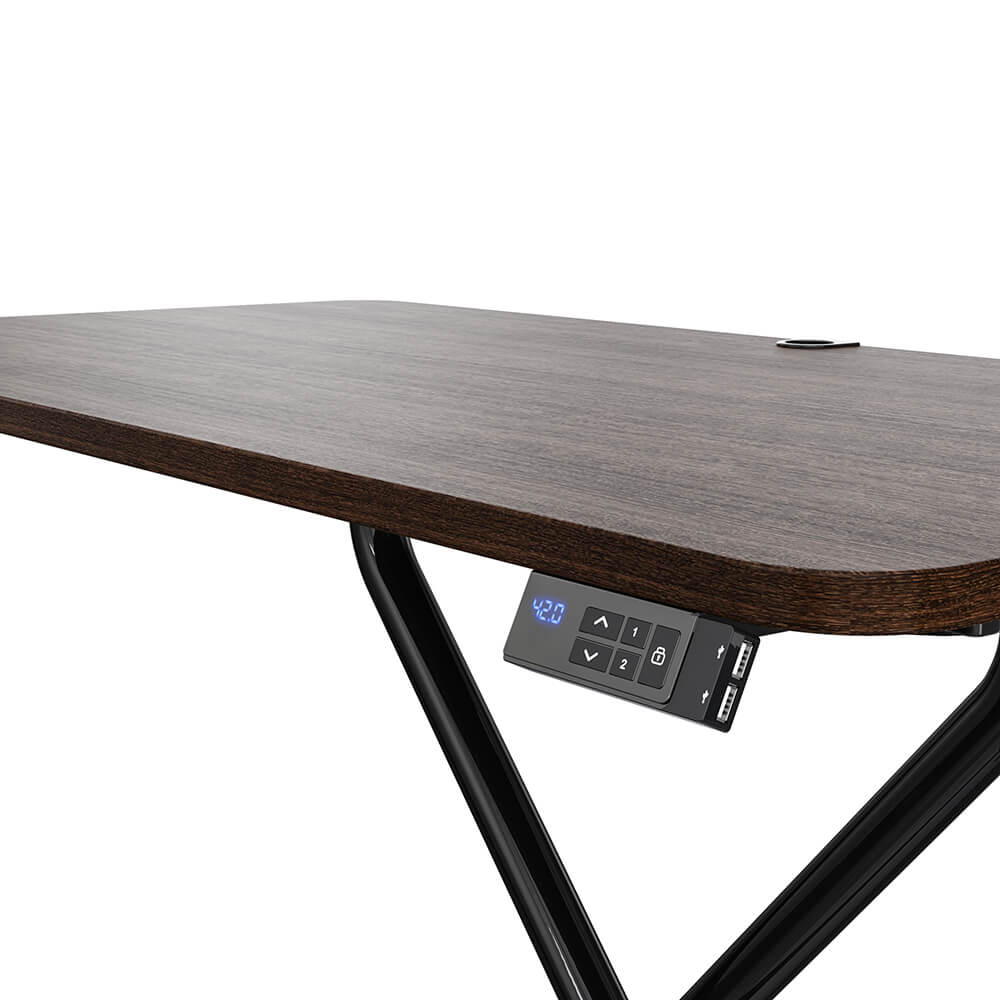
- Two programmable memory presets store a floor position and a standing one.
- Dining chairs, office chairs, and stools all work across this band.
- Moving between floor and chair takes a button press rather than a rearrangement.
Standing
The top of the range is where size selection matters most.
- The Standard model reaches 42 inches and suits users up to 5 feet 9 inches.
- The Large model reaches 48 inches and suits users 5 feet 10 inches and taller.
- Desktops measure 46 by 24 inches and 52 by 25 inches respectively.
- Collision detection stops the motor when the surface meets an obstruction.
Frame Specifications That Matter Close to the Floor
Low working positions place different demands on a frame than standing height does. Stability at 13 inches is a separate problem from stability at 42.
- The mechanical range runs from 6 inches collapsed to 42 or 48 inches extended.
- Operational load rating is 75 pounds on both sizes.
- Unit weight is 67 pounds for the Standard and 78 pounds for the Large.
- Four integrated wheels roll across hard flooring and thick carpet alike.
- A removable rubber wheel brake holds the frame still during work.
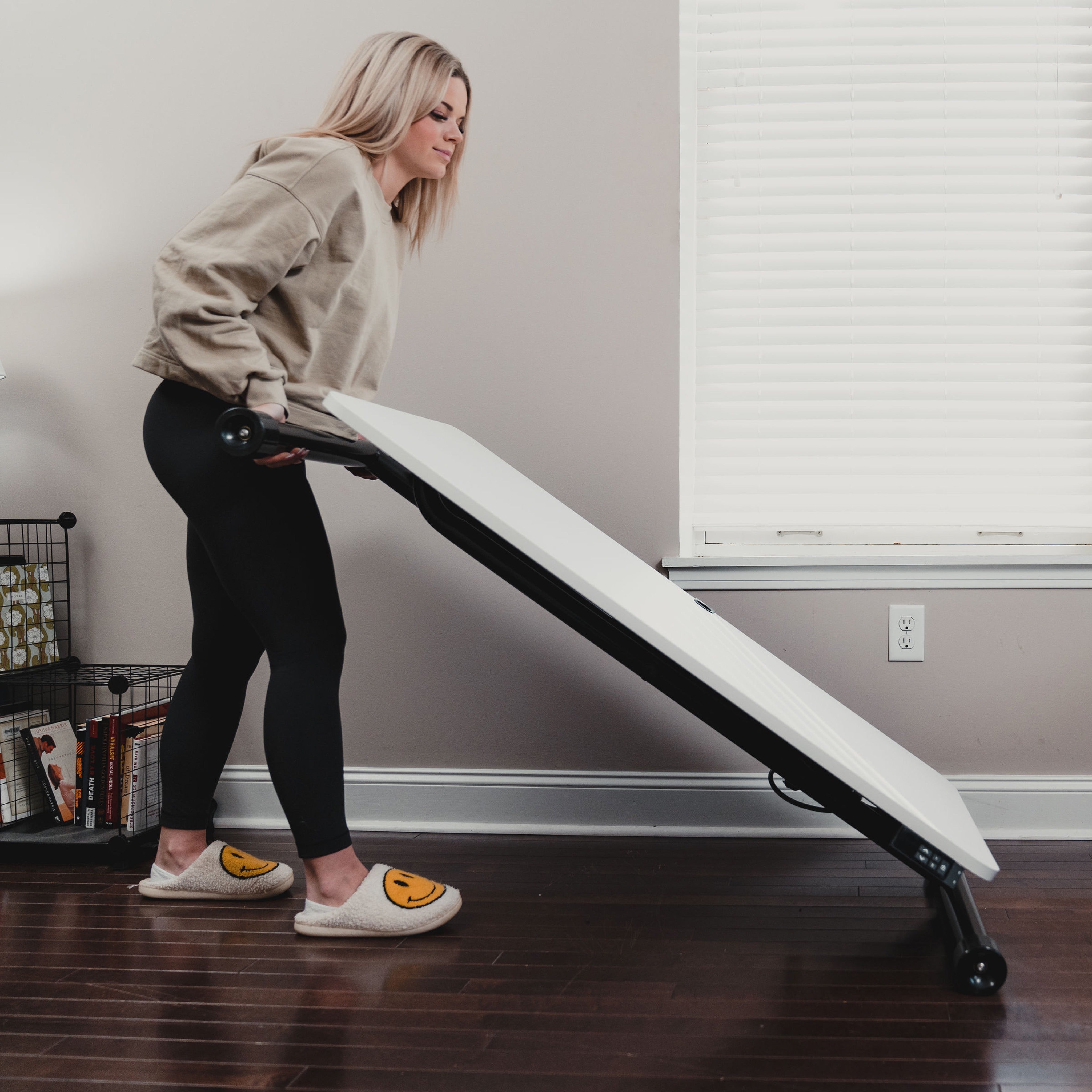
Weight reads differently alongside the wheel spec. At 67 pounds the Standard would be awkward to carry, which is why we built it to roll like a hand truck or push like a shopping cart instead of asking anyone to lift it.
Certification and Load Testing
Furniture certification is voluntary in the United States, so testing marks say something about how a frame was built. These are the results our desks carry.
- Intertek certified and conforming to UL962, the standard covering small office and home office furnishings.
- Certified to CSA C22.2 No. 68 for motor-operated appliances.
- Cycle tested past 3,000 consecutive height changes under a 75 pound load.
- Passed the required stability, durability, and tip tests for certification.
Cycle count is the figure worth weighing for anyone planning to move between floor, chair, and standing several times daily. A frame changing height six times a day reaches 3,000 cycles in roughly 18 months.
Storage Once Floor Work Ends
A floor desk claims the same square footage as any other desk while it stands. Collapsing removes that footprint completely.
- Both models fold to 6 inches thick.
- Collapsed dimensions run 53 by 24 by 6 inches for the Standard.
- The Large collapses to 56.75 by 25 by 6 inches.
- Six inches clears most bed frames, which sit 7 to 14 inches off the floor.
- Closet, wall, and behind-couch storage all work at that thickness.
Every desk ships in one box fully assembled from our Milwaukee, Wisconsin facility, so first setup takes seconds rather than an afternoon with an allen key. Anyone comparing frame types more broadly can read how adjustable and electric models behave across a working day before settling on a height range.
Position Changes Are the Actual Benefit
Floor sitting is not inherently healthier than chair sitting. The value lies in having somewhere else to go when one position stops feeling comfortable.
- Federal guidance now opens with the instruction to move more and sit less.
- Increased sedentary time carries elevated risk for heart disease and high blood pressure.
- The 10-minute minimum bout requirement was dropped in the second edition of the guidelines.
- Short movement scattered through the day counts toward the recommendations.
- Changing working height is among the simplest movement prompts to build into a workday.
FAQS About Floor Desks
These come up regularly from customers setting up ground-level workspaces for the first time.
What height should a floor desk be?
Between 13 and 18 inches suits cross-legged sitting for most adults, with kneeling running a few inches higher. Both floor desks we build start at a suggested working height of 13.5 inches including the tabletop, which lands inside that range without requiring a riser underneath.
Do legs hit the frame when sitting on the floor?
Rarely. We ran ergonomic testing across a range of user heights during design, covering both the 90 degree seated position and fully extended legs. Interference generally begins above 6 feet 7 inches, which leaves clearance for nearly everyone below that.
Can a floor desk hold a monitor setup?
Yes, within the 75 pound operational rating. The PRO model adds monitor arm support compatible with single and dual arms, sold separately. It also carries an integrated surge protector with three power outlets, three USB ports, and one USB-C connection, plus underside metal covers and a cable management net.
Is sitting on the floor sitting better than using a chair?
Neither wins outright. Floor sitting loads the hips and lower back differently than chair sitting, which some people find relieving and others find tiring within half an hour. The measurable benefit comes from alternating between positions rather than holding any single one for eight hours.
How much does a floor desk cost?
Our GO model starts at $987 for the Standard size and $1,174 for the Large, while the PRO runs $1,097 and $1,274. Both share the same X-frame, motor, and height range. Every purchase carries a 60-day return window and a 5-year warranty covering the motor, frame, electronics, sheet metal, and wheels.
Deciding Whether Floor Height Belongs in a Workday
Floor work suits some bodies and frustrates others, which is worth testing before spending anything. A cushion on the ground and a low table for a week gives a reasonable read. Anyone who finds the position comfortable then faces a narrow market, since almost nothing adjustable reaches below 27 inches. Lillipad foldable electric standing desk sits in that gap with a range starting at 13.5 inches, and we attach a 60-day return window precisely because floor work is a preference rather than a universal fit. Trying it for a month costs nothing but a shipping label if it turns out not to suit.
Floor Sitting Desk Setup, Cushions, and Session Length
A floor sitting desk fails or succeeds on what sits under the person, not on the desk itself. Cushion height sets pelvic angle. Pelvic angle sets spinal curve. The spinal curve determines whether 40 minutes on the floor feels restful or punishing. Getting the seat right first makes the desk height question straightforward afterward.
Floor Sitting Desk Alignment Rules
Posture guidance is written around chairs, but the underlying rule applies at any height. The spine carries the same three curves whether the hips are at 18 inches or on the ground.
- Correct posture maintains the natural neck, mid back, and low back curves without increasing them.
- The head should sit above the shoulders, with the top of the shoulder over the hips.
- Elbows stay bent between 90 and 120 degrees during typing.
- Thighs and hips need padded support rather than bare contact with a hard floor.
One piece of standard chair guidance cannot carry over. Seated advice assumes feet flat on the floor with ankles ahead of the knees, which floor sitting does not allow. That is why the cushion has to do the work a chair seat normally does.
Cushion Height and Pelvic Tilt
Sitting flat on the ground rolls the pelvis backward for most adults, which rounds the lower back and pulls the head forward. Raising the hips corrects it.
- Sitting directly on the floor tips the pelvis into posterior rotation.
- Elevating the hips 2 to 4 inches restores a neutral pelvic angle.
- A firm cushion holds that height, while soft foam compresses and loses it.
- Tight hamstrings and hip flexors increase the height needed.
- Crossed ankles sit lower than crossed shins and change the target again.
The practical test is simple. If the lower back rounds within a few minutes, the cushion is too low or too soft.
Session Length and Position Rotation
Floor sitting is a rotation tool rather than an all-day posture. Standard guidance for any seated work applies with more urgency close to the ground.
- Most adults hold one floor position 20 to 45 minutes before discomfort begins.
- Switching positions often is the recommendation for seated work generally.
- Brief walks and gentle stretching relieve accumulated muscle tension.
- Cross-legged, kneeling, side sitting, and legs extended each load different joints.
- Rotating among them extends total floor time well past what one position allows.
Anyone weighing floor work against seated and standing options can compare how adjustable frames behave across a working day before rearranging a room around it.
Support Gear Worth Owning
Floor work needs less equipment than a chair setup, though what it does need matters more. Three items cover most situations.
- A firm meditation cushion or wedge raises the hips and sets pelvic angle.
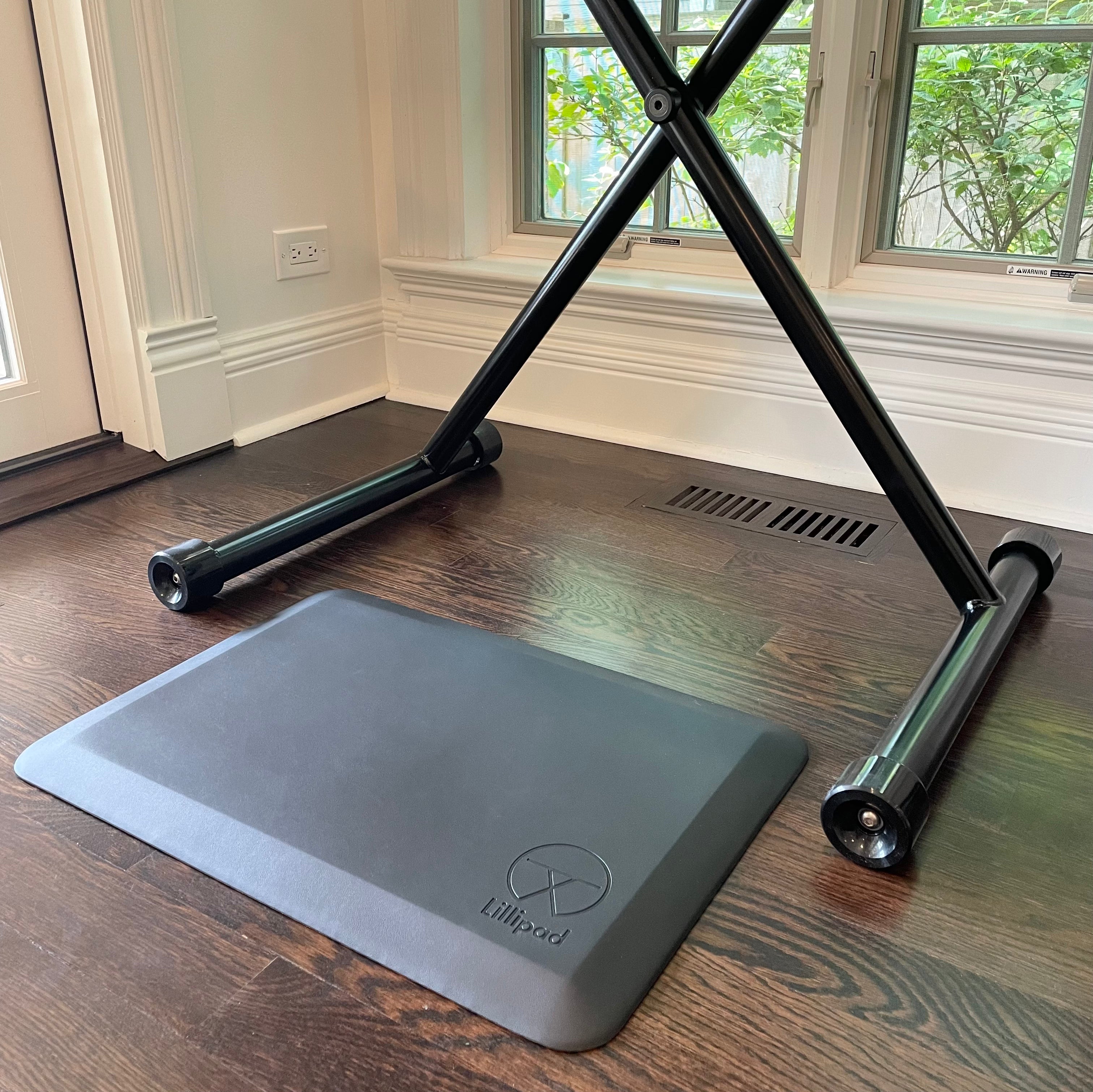
- A padded mat protects knees and ankles during kneeling positions.
- A laptop stand or monitor arm lifts the screen so the neck stays neutral.
- Machine-washable covers matter, since floor gear collects more dust than chair cushions.
Our Floor Comfort Set was built for this. It centers on a round-corner meditation mat measuring 26 by 26 inches at 2 inches of high-density foam, firm enough to hold its height through a workday, with a removable machine-washable cover in neutral grey and a carry handle for moving it between rooms. The set runs $134.
Desk Height for Floor Work
Height matching is where most floor setups break down, because almost nothing on the market travels far enough. The gap is larger than it looks.
- Cross-legged working height lands between 13 and 18 inches for most adults.
- Kneeling raises that target several inches higher.
- Most sit-stand desks stop at a 27 inch minimum, well above either figure.
- A floor sitting desk needs a suggested working height near 13.5 inches to clear cross-legged posture.
- Adding a cushion raises the target by the compressed thickness of that cushion.
Both of our sizes start at a suggested working height of 13.5 inches including the tabletop, and both reach standing height on the same frame. That range is why a Lillipad covers floor, chair, and standing positions rather than forcing a choice among them.
Frequently Asked Questions
These come up most often from people trying ground-level work for the first time.
How high should a cushion be for floor sitting?
Two to four inches of firm foam suits most adults. Tight hips need more. The test is whether the lower back holds its natural curve after five minutes rather than rounding backward.
Is sitting on the floor bad for the knees?
Kneeling places the knee in deep flexion, which suits some people poorly. Cross-legged, side sitting, and legs-extended positions avoid that loading. Anyone with an existing knee condition should check with a clinician first.
How long can someone work at a floor sitting desk?
Roughly 20 to 45 minutes per position for most adults. Rotating among four positions extends that considerably. Treating floor work as one mode among several keeps it sustainable across a full day.
Can a regular desk be lowered for floor sitting?
Almost never. Fixed desks stop near 29 inches and most adjustable frames bottom out around 27. Reaching floor height takes a frame engineered with far more vertical travel than a standard column offers.
Does floor sitting help with back pain?
It changes the loading rather than removing it. Some people find relief, others find their lower back round and feel worse. Position rotation does more for comfort than any single posture choice.
Testing Floor Work Before Rearranging a Room
A week of trial answers this faster than any spec comparison. A firm cushion, a low surface, and four rotating positions reveal within days whether the floor suits a given body. Those who take to it hit a narrow market almost immediately, since the 27 inch floor on most adjustable desks rules out nearly everything. We built our range down to 13.5 inches for that reason and attached a 60 day return window to every order, which leaves room to find out at no real cost. Starting with the cushion rather than the desk is the part most people skip.
Floor Desk for Adults: Sizing, Load, and Standards
A floor desk for adults is not a scaled-up children's table. Adult torsos need more clearance, adult equipment weighs four times as much as a coloring book, and adult work sessions run hours rather than minutes. Surface size, load rating, and leg clearance separate a product built for grown bodies from one borrowed from a nursery catalog.
Why Children's Floor Furniture Does Not Scale Up
Low tables sold for kids look like an obvious shortcut into floor work. The dimensions fall apart under adult use within a week.
- Children's floor tables typically measure 20 to 30 inches wide, too narrow for a keyboard and mouse.
- Their load ratings often sit near 20 to 30 pounds, below a single monitor plus a laptop.
- Leg heights are fixed, with no way to match adult elbow position.
- Particleboard tops at 0.5 inches sag under a monitor within months.
- Painted finishes wear quickly under forearm contact across full workdays.
The size mismatch is the first failure, and the load rating is the second. Neither is fixable after purchase.
Adult Dimensions That Set Desk Size
Surface size follows what an adult actually places on it, not what fits in a corner. Three measurements decide whether the desk works.
- A full-size keyboard runs 17 to 18 inches wide, leaving mouse space beyond that.
- A 24 inch monitor occupies roughly 21 inches of width on its stand.
- Adult shoulder width averages 16 to 20 inches, which sets minimum comfortable reach.
- A working depth of 24 inches keeps a screen at arm's length.
- Widths under 40 inches force a laptop-only setup for most adults.
Every Lillipad foldable electric standing desk measures 46 by 24 inches on the Standard and 52 by 25 inches on the Large, sized around a keyboard, a mouse, and a monitor sitting together rather than in sequence.
Load Ratings for Adult Equipment
Adult desk loads add up faster than most buyers estimate. Running the numbers before buying prevents a frame from being overloaded on day one.
- A 27 inch monitor with a stand weighs 12 to 20 pounds.
- A mid-tower desktop computer adds 20 to 35 pounds.
- A laptop, dock, and external drive together reach 8 to 12 pounds.
- Books, a lamp, and a monitor arm add another 10 to 15 pounds.
- A typical adult setup lands between 45 and 70 pounds in total.
That total is why our frames carry a 75 pound operational load rating and cycle testing past 3,000 consecutive height changes at that load. A floor desk for adults rated below 50 pounds cannot carry a full desktop setup without running at its limit continuously.
Stability Standards Do Not Cover Desks
Buyers often assume a federal safety standard governs desk stability. It does not, which puts the burden of checking back on the shopper.
- The mandatory federal tip-over rule applies only to clothing storage units.
- Those units must be freestanding, 27 inches tall, 30 pounds, and hold 3.2 cubic feet of enclosed storage.
-
Office furniture sits outside that scope entirely, alongside bookcases and dining furniture.
- Desks rely on voluntary standards such as UL962 instead.
- A brand that skips voluntary testing faces no federal consequence for it.
Our desks are Intertek certified conforming to UL962, certified to CSA C22.2 No. 68, and passed the stability, durability, and tip tests those standards require. That testing is optional, which is exactly why it is worth checking on any brand.
Leg and Crossbar Clearance for Adult Bodies
Adult legs need room that children's furniture never has to provide. Clearance is the specification most floor desks omit from their listings.
- Cross-legged posture spreads the knees 24 to 30 inches apart in most adults.
- Extended-leg positions need unobstructed depth beneath the surface.
- Frame crossbars sitting low can meet shins during either position.
- Interference on our frames generally starts above 6 feet 7 inches.
- Our co-founders stand 6 feet 4 inches and 6 feet 6 inches, which set the clearance target in testing.
Anyone fitting a full setup into a shared or rented room can also review ways to build a work area when floor space runs short.
FAQS
These come up most often from adults sizing a floor desk for adults around real equipment rather than a corner of a room.
What size should a floor desk for adults be?
At least 40 inches wide and 24 inches deep for a keyboard, mouse, and monitor together. Narrower surfaces work only for laptop-only setups without external peripherals.
How much weight should a floor desk hold?
A typical adult setup runs 45 to 70 pounds once a monitor, computer, and accessories are counted. A 75 pound operational rating covers that with margin remaining.
Are floor desks made for children safe for adults?
Not usually. Load ratings near 20 to 30 pounds and widths under 30 inches fall short of adult requirements, and fixed leg heights cannot match adult elbow position.
Do floor desks have to meet a safety standard?
No federal stability standard covers desks. The mandatory tip-over rule applies to clothing storage units only, so voluntary certification like UL962 is the available evidence.
Will a floor desk fit a tall adult?
Depends on crossbar clearance and maximum height. Ours clear most adults up to roughly 6 feet 7 inches, and our Large model reaches 48 inches for standing work.
Sizing the Desk to the Equipment Rather Than the Room
Adding up the equipment first answers most of this. A monitor, a computer, and accessories reaching 60 pounds rule out any frame rated near 40. A keyboard and mouse side by side rule out any surface under 40 inches wide.
Lillipad foldable electric standing desk frames were built around those adult numbers rather than adapted down from office furniture or up from children's tables, and we publish the load rating, cycle count, and certifications so the arithmetic can be checked before ordering. Weighing the actual equipment takes five minutes with a bathroom scale and settles the question outright.